These Could Be Early Signs of Cancer—but Don’t Assume the Worst
Changes on the skin can sometimes be an early clue that something in the body needs medical attention. But an unusual-looking rash, lump, or cluster of bumps does not automatically mean cancer.
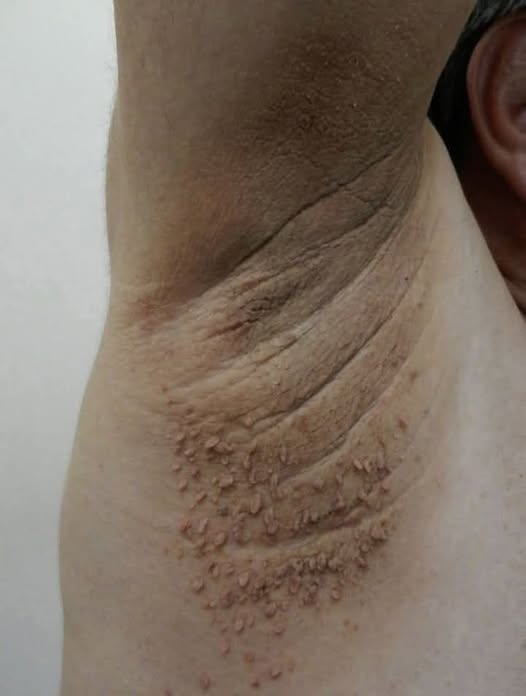
The image shows multiple small raised growths in the armpit area. Several common, non-cancerous skin conditions can look similar, including skin tags, viral warts, irritation, and other benign growths. A photograph alone cannot determine the cause.
Skin changes that deserve attention
See a doctor or dermatologist if you notice a skin growth that:
- Appears suddenly or changes rapidly
- Continues growing
- Bleeds without being injured
- Develops persistent crusting or sores
- Changes significantly in color or shape
- Becomes painful, ulcerated, or persistently itchy
- Does not heal or keeps returning
What about cancer?
Some cancers can produce visible skin changes, and certain internal cancers can occasionally be associated with unusual skin findings. However, there is no single skin appearance that can reliably diagnose cancer.
For example, darkened, thickened skin in body folds can sometimes be associated with acanthosis nigricans, which is often related to insulin resistance but can rarely occur as a sign of an underlying malignancy. Most cases, however, are not caused by cancer.
Don’t try to remove unexplained growths yourself
Avoid cutting, burning, freezing, or applying strong chemicals to an unexplained skin growth. Doing so can cause infection or make it harder for a clinician to determine what the lesion originally looked like.
A dermatologist can examine the area and, if necessary, perform a simple biopsy to determine exactly what it is.
The key message: unusual skin changes are worth checking, but they should not be labeled “cancer” from an image or social-media post. Early medical evaluation is the safest way to find out what you’re actually dealing with.