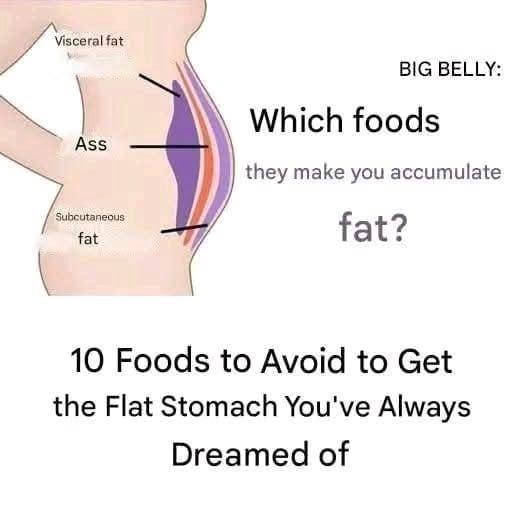
10 Foods to Limit If You Want a Flatter-Looking Stomach
If you’re hoping for a flatter stomach, it’s easy to fall into the trap of thinking that one particular food is responsible for belly fat.
The reality is more nuanced. No food automatically causes belly fat, and avoiding a specific list of foods cannot guarantee a flat stomach. Body shape is influenced by genetics, hormones, overall calorie intake, activity, sleep, and many other factors.
However, some foods can contribute to bloating, water retention, or excess calorie intake, which may temporarily make your abdomen look or feel larger.
1. Sugary soft drinks
Sodas and other sugar-sweetened beverages can add substantial calories without making you feel as full as solid food. Carbonation can also temporarily increase bloating in some people.
2. Highly processed snack foods
Chips, packaged crackers, and similar snacks can be high in calories, refined carbohydrates, and sodium while providing relatively little fiber or protein.
3. Processed meats
Bacon, sausages, hot dogs, and other processed meats can be high in sodium and saturated fat. Frequent consumption is also associated with increased long-term health risks.
4. Deep-fried foods
Fried chicken, fries, and other deep-fried foods are energy-dense and can be easy to overeat. Large or fatty meals may also cause digestive discomfort in some people.
5. Pastries and doughnuts
These foods often combine refined flour, added sugar, and fat, making them calorie-dense without providing much fiber or protein.
6. Large amounts of sweets
Candy, cookies, and other sugary treats can contribute considerable added sugar and calories when eaten frequently.
7. Alcohol
Alcohol provides calories and can also affect food choices and appetite. Some alcoholic beverages are particularly high in added sugar.
8. Very salty foods
Excess sodium can cause temporary water retention, which may make you feel puffy or bloated. Packaged soups, instant noodles, sauces, and many processed foods can contain substantial amounts of sodium.
9. Foods that personally trigger bloating
Beans, certain vegetables, dairy products, wheat products, and artificial sweeteners can cause gas or bloating in some people—but not everyone reacts to them.
There’s no need to eliminate nutritious foods simply because they’re on an internet “flat stomach” list. Pay attention to your own digestive patterns instead.
10. Oversized portions
This one is less about what you eat and more about how much. Even nutritious foods can contribute to excess calorie intake when portions are consistently larger than your body’s needs.
What actually helps?
Rather than chasing a “flat stomach,” focus on habits that support a healthy body:
- Eat plenty of vegetables, fruits, whole grains, and legumes.
- Include adequate protein and fiber.
- Choose mostly minimally processed foods.
- Drink water regularly.
- Exercise consistently, including resistance training and aerobic activity.
- Get sufficient sleep.
- Limit excessive alcohol and sugary drinks.
And remember: some abdominal softness or a little belly fat is completely normal. A healthy body does not need to look perfectly flat, and bloating after eating doesn’t mean you’ve gained fat.
If abdominal swelling is persistent, painful, or accompanied by unexplained weight changes or other symptoms, it’s better to discuss it with a healthcare professional rather than assuming it’s simply a dietary issue.