10 Clues Your Body Might Be Giving You About Clogged Arteries ❤️🩺
Arteries are the body’s highways, carrying oxygen-rich blood to the heart, brain, legs, and every other organ.
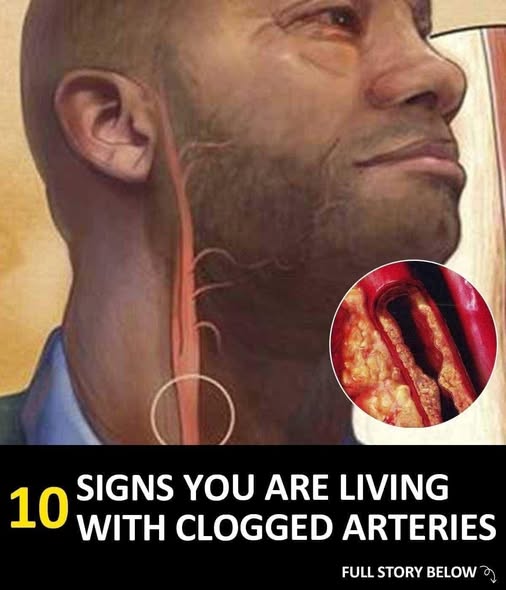
When fatty deposits called plaque build up inside an artery, the condition is known as atherosclerosis. The process can develop gradually, sometimes for years, without producing any obvious symptoms.
That’s what makes it so important to recognize the warning signs.
However, there’s one crucial point to remember: many of these symptoms can have causes unrelated to blocked arteries. They are clues—not a diagnosis.
Here are 10 signs worth knowing.
1. 🫀 Chest Pressure or Discomfort
Chest discomfort is one of the most important symptoms to take seriously.
If the heart isn’t receiving enough oxygen-rich blood, you may experience pressure, squeezing, heaviness, tightness, or discomfort in the chest. This can happen during physical activity or emotional stress and may improve with rest.
It isn’t always described as sharp pain.
Some people describe it as feeling as though something heavy is sitting on their chest.
2. 😮💨 Shortness of Breath
Feeling unusually breathless during activities that normally don’t leave you winded can sometimes indicate that the heart isn’t getting enough blood.
Shortness of breath can have many other causes, including lung conditions, anemia, poor fitness, and infections.
But when it is new, unexplained, or worsening—particularly alongside chest discomfort—it deserves medical attention.
3. 🦵 Leg Pain While Walking
Atherosclerosis can affect arteries supplying the legs, causing a condition called peripheral artery disease (PAD).
One classic symptom is pain, aching, cramping, or heaviness in the leg muscles during walking that improves after resting.
This is called intermittent claudication.
The pain may occur in the calf, thigh, hip, or buttock depending on where blood flow is reduced.
4. 🧊 Cold Feet or Legs
Reduced circulation can sometimes cause one foot or leg to feel colder than the other.
Cold feet by themselves are extremely common and don’t necessarily indicate an arterial blockage.
But persistent coldness—especially when accompanied by pain, numbness, skin-color changes, or sores—should be evaluated.
5. 🩹 Wounds That Heal Slowly
Atherosclerosis can reduce blood flow to the legs and feet.
When circulation is poor, cuts, blisters, or sores may take longer to heal.
This is particularly important in people with diabetes, who may already have an increased risk of circulation and nerve problems.
A wound that isn’t healing properly deserves medical attention rather than being ignored.
6. 🦶 Numbness or Weakness in a Leg
Reduced blood supply can sometimes cause unusual sensations in an affected limb, including numbness, weakness, or discomfort.
Again, there are many possible explanations—from nerve compression to spinal problems—so numbness isn’t proof of clogged arteries.
But sudden or severe symptoms should never be dismissed.
7. 🎨 Changes in Skin Color
Poor circulation can sometimes cause the skin of the feet or legs to look unusually pale, bluish, or otherwise different from normal.
A noticeable difference in color between the two limbs is particularly worth mentioning to a healthcare professional.
Sudden changes accompanied by severe pain or loss of sensation can indicate an emergency.
8. 🧔 Erectile Dysfunction
For some men, erectile dysfunction can be an early sign of blood-vessel disease.
An erection depends on adequate blood flow, and problems affecting the arteries can interfere with that process.
Because blood vessels in the penis are relatively small, vascular problems may become apparent there before more obvious cardiovascular symptoms develop.
That doesn’t mean erectile dysfunction automatically means someone has clogged arteries. Hormonal issues, medications, stress, neurological conditions, and many other factors can contribute.
9. 🧠 Sudden Trouble Speaking or Seeing
Atherosclerosis can affect arteries supplying the brain as well as those supplying the heart and limbs.
A temporary interruption of blood flow to the brain can cause a transient ischemic attack (TIA), sometimes called a mini-stroke.
Warning signs can include:
- Sudden weakness or numbness, particularly on one side
- Difficulty speaking or understanding speech
- Sudden vision problems
- Loss of balance or coordination
- Sudden severe dizziness
These symptoms require urgent medical attention, even if they disappear.
A TIA can be a warning that a stroke may follow.
10. 😴 Unusual Fatigue
Unexplained fatigue can sometimes accompany heart disease, particularly when the heart is struggling to receive enough oxygen-rich blood.
But fatigue is one of the least specific symptoms on this list.
Poor sleep, stress, infections, anemia, thyroid problems, medications, and countless other conditions can make you tired.
The important thing is to look at the overall pattern, rather than assuming fatigue alone means an artery is blocked.
🚨 The Symptoms You Should Never Ignore
Some symptoms aren’t something to monitor at home.
Call your local emergency medical service immediately if you experience signs that could indicate a heart attack or stroke, such as:
❤️ Heart attack warning signs
- Chest pressure, squeezing, or discomfort
- Pain spreading to the arm, shoulder, back, neck, or jaw
- Severe shortness of breath
- Cold sweating
- Nausea or sudden weakness
🧠 Stroke warning signs
- Facial drooping
- Arm weakness or numbness
- Speech difficulties
- Sudden vision problems
- Sudden loss of balance or coordination
Don’t wait to see whether these symptoms disappear.
🩺 How Do Doctors Actually Check for Artery Disease?
Symptoms alone cannot tell you whether an artery is clogged.
Depending on your symptoms and risk factors, a healthcare professional may evaluate your blood pressure, cholesterol, blood sugar, smoking history, family history, and other cardiovascular risk factors.
Additional tests may be appropriate in some situations.
The goal isn’t simply to discover a blockage—it’s also to identify and reduce the factors that contribute to atherosclerosis.
❤️ Protecting Your Arteries Starts Early
You don’t have to wait for symptoms before taking cardiovascular health seriously.
Helpful habits include:
- 🥗 Eating a heart-healthy diet
- 🚶 Staying physically active
- 🚭 Avoiding tobacco
- ⚖️ Maintaining a healthy weight
- 🩸 Managing blood pressure and cholesterol
- 🩺 Keeping diabetes under control if you have it
- 😴 Getting adequate sleep
- 🍷 Limiting alcohol if you drink
These habits can’t guarantee that artery disease will never develop, but they can reduce cardiovascular risk.
🌿 The Bottom Line
Clogged arteries don’t always announce themselves.
Sometimes the first sign is chest discomfort. Sometimes it’s leg pain while walking. In other cases, there may be no symptoms at all until a serious cardiovascular event occurs.
That’s why prevention and regular health checks matter just as much as recognizing warning signs.
Your body can give you clues—but only proper medical evaluation can determine what’s actually happening inside your arteries.
Listen to unusual symptoms, take sudden changes seriously, and don’t wait for a warning sign to start caring for your heart. ❤️
This article is for general education and isn’t a diagnosis. If you experience sudden chest pain, severe breathing difficulty, or possible stroke symptoms, seek emergency medical care immediately.