My Neighbor Was Stealing Electricity Every Night — So I Taught Her a Lesson She Never Saw Coming
I’m a 64-year-old widow who has lived in the same quiet suburban neighborhood for more than three decades.
After my husband passed away, I learned to appreciate the small things in life.
A peaceful morning with my coffee.
My flowers blooming in the backyard.
My old cat sleeping by the window.
I never expected that, at my age, I would have to deal with something as ridiculous as a neighbor secretly stealing electricity from my house.
It started so subtly that I almost ignored it.
Every morning, I noticed that my electricity meter seemed to be running more than usual. At first, I blamed myself. Maybe I was leaving lights on. Maybe the old refrigerator in the garage was using more power than it should.
But then I noticed something strange.
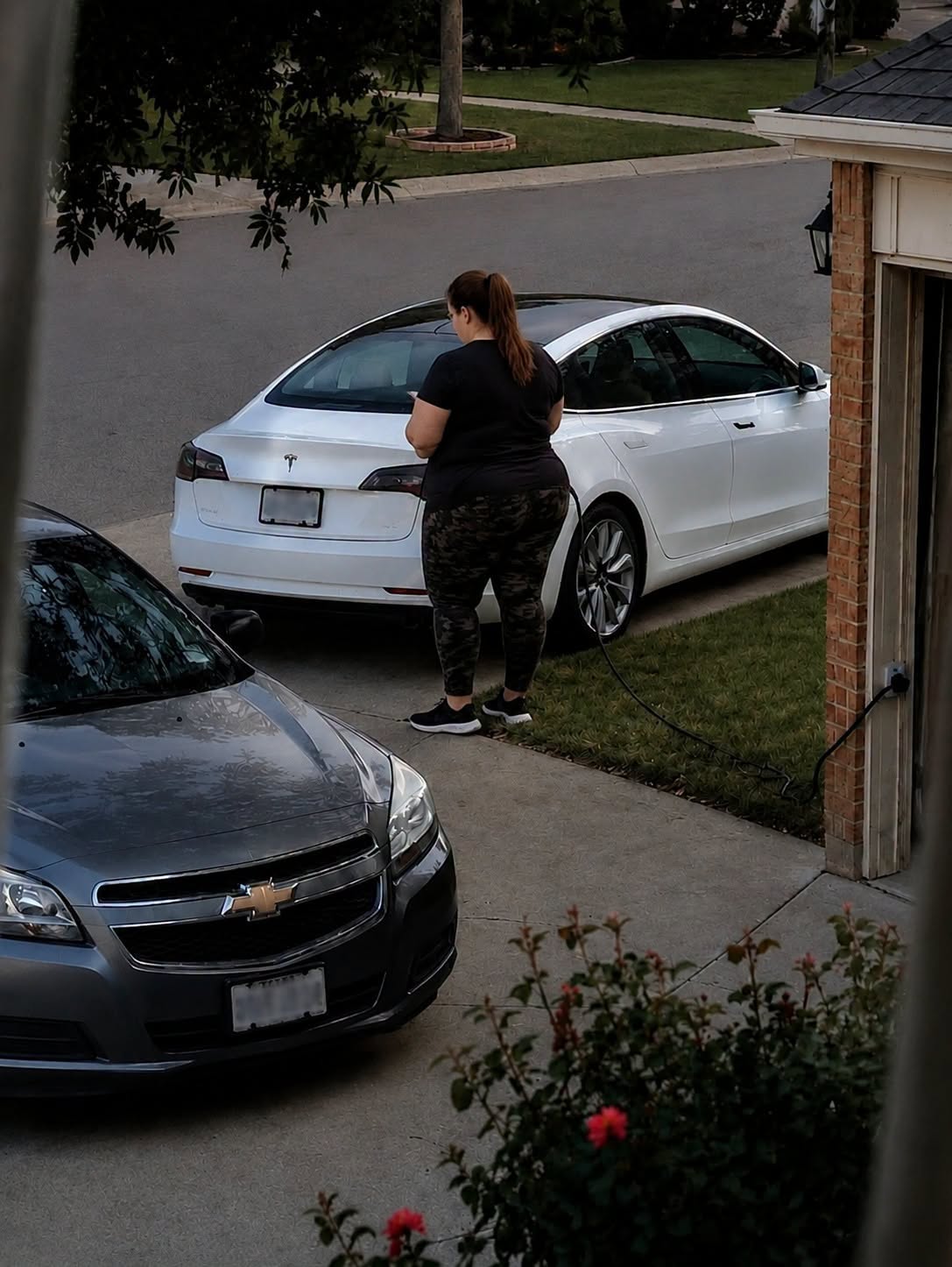
My neighbor, Karen, had recently bought a shiny electric car.
And almost every morning, her car seemed to be parked unusually close to the side of my property.
I didn’t think much of it—until one night I woke up around 2 a.m.
I looked outside my bedroom window.
There was Karen’s car.
Parked beside my fence.
And a cable was running from somewhere near my house toward her vehicle.
I couldn’t believe what I was seeing.
The next morning, I checked the side of my house.
There it was.
An extension cable connected to an outdoor electrical outlet on my property.
Karen had been using my electricity to charge her car.
Without asking.
Without telling me.
And apparently, she had been doing it for weeks.
I was furious.
But I decided not to confront her immediately.
Instead, I started keeping records.
I wrote down the dates and times I noticed the cable.
I took photographs.
I checked my electricity usage.
For several weeks, I stayed quiet.
Then one evening, Karen crossed a line.
She knocked on my door and casually asked if she could “borrow” my outdoor outlet because her charger wasn’t working properly.
I stared at her.
“Borrow it?” I asked.
She smiled awkwardly.
“It’s just electricity. I’ll pay you back eventually.”
That was the moment I realized she wasn’t sorry.
She simply believed she was entitled to use my property.
I calmly told her that she was no longer allowed to connect anything to my house.
She laughed.
“You’re really making a big deal about this?”
I didn’t argue.
I simply closed the door.
The next morning, I called an electrician.
He inspected the outlet and confirmed exactly what I suspected: Karen had been connecting her charger to my electrical supply.
I also asked him to install a lockable cover over the outdoor outlet.
But I wasn’t finished.
I gathered all the photographs and records I had collected.
Then I contacted the neighborhood association and explained what had been happening.
I didn’t exaggerate.
I didn’t insult Karen.
I simply showed them the evidence.
A few days later, there was a neighborhood meeting.
Karen arrived confident and irritated, apparently expecting everyone to take her side.
Instead, the evidence was presented.
The photographs.
The dates.
The electrical usage.
Everything.
Karen’s face turned bright red.
She tried to claim that she had only used the outlet “a few times.”
Then someone asked why my electricity usage had increased significantly during the exact period her electric car was being charged outside my house.
She had no answer.
In the end, she agreed to reimburse me for the electricity she had used and promised never to connect anything to my property again.
But the biggest surprise came afterward.
She knocked on my door one Saturday morning.
For a moment, I thought she was going to complain again.
Instead, she apologized.
She admitted that she had convinced herself it wasn’t a big deal because I “probably wouldn’t notice.”
I told her something I’ll never forget.
“Karen, the electricity wasn’t the biggest problem. The biggest problem was that you thought my kindness meant you could take advantage of me.”
She nodded quietly.
Since then, things have been different.
We aren’t best friends.
We probably never will be.
But she respects my property now.
And I learned something important too.
Being kind doesn’t mean allowing people to walk over you.
Sometimes, the strongest lesson isn’t revenge.
It’s simply standing up for yourself, calmly, firmly, and without backing down.
And these days, when I sit in my backyard with my coffee and watch my flowers bloom, I appreciate the peace even more.
Because sometimes protecting your peace means setting a boundary—and making sure everyone knows it.