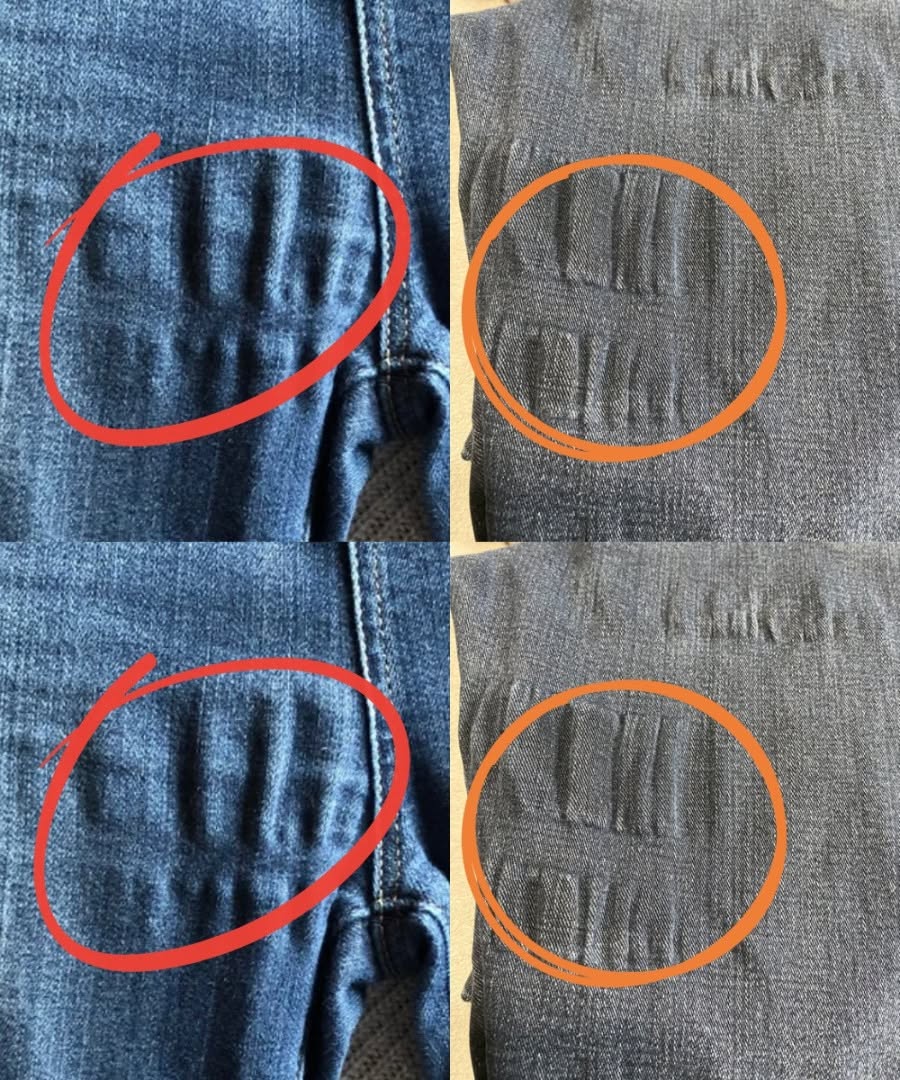
Why Do Jeans Get Weird Ripples After Washing?
Have you ever pulled your favorite jeans out of the washin machine only to notice strange ripples, waves, or wrinkled lines running across the fabric? Don’t worry—you’re not alone. This is a common thing that happens to denim, and in most cases, it doesn’t mean your jeans are damaged.
What Causes Those Weird Ripples?
The main reason is the way denim reacts to water, heat, and movement.
1. Denim Fibers Tighten
When jeans get wet, the cotton fibers absorb water and can temporarily swell. As the fabric dries, those fibers contract again, sometimes unevenly. This can create ripples or wavy areas.
2. Washing Machine Movement
The tumbling and spinning inside a washing machine can twist the fabric. If jeans are washed with heavy clothing or packed into a crowded load, creases can become more pronounced.
3. High Heat
Hot water and especially high-temperature drying can cause denim to shrink and change shape. The heat may also make existing creases look deeper.
4. The Denim’s Weave
Jeans are made from tightly woven cotton. Depending on the quality, stretch content, and weave, some denim is naturally more likely to develop temporary wrinkles and ripples.
How to Reduce the Ripples
Try these simple tips:
- Wash jeans inside out.
- Use cold or cool water.
- Avoid overloading the washing machine.
- Choose a gentle or normal cycle rather than an extremely aggressive one.
- Remove jeans promptly after washing.
- Smooth and reshape them while they are still damp.
- Air-dry them whenever possible.
- If necessary, use a low-heat dryer setting.
Can You Fix the Ripples?
Usually, yes. Light ripples often disappear when the jeans are worn. You can also gently stretch and smooth the fabric while damp or use a warm iron/steamer according to the garment’s care label.
So the next time your jeans come out of the wash looking a little strange, don’t panic. Those ripples are usually just denim responding to moisture, movement, and heat—and they often disappear with proper care.