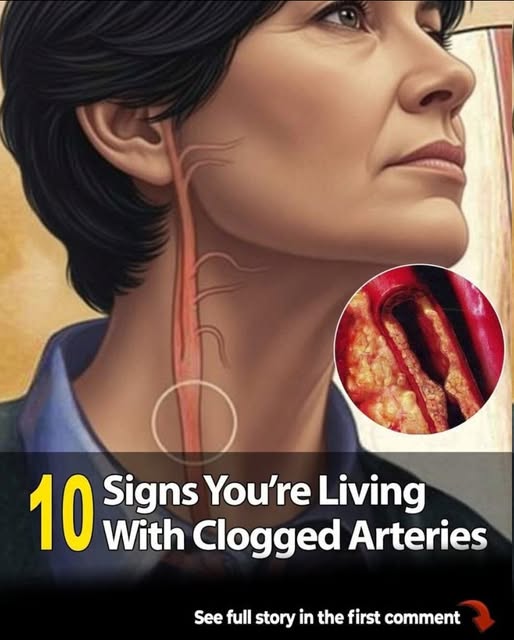
❤️ 10 Warning Signs of Blocked Arteries You Shouldn’t Ignore
Your arteries work quietly every second, carrying oxygen-rich blood throughout your body. When fatty deposits build up inside them—a process known as atherosclerosis—blood flow can become restricted.
The tricky part is that narrowed arteries may cause no symptoms at all until the disease becomes advanced. That’s why certain warning signs deserve attention, especially when they are new, persistent, or occur with exertion. 🩺
Here are 10 symptoms that shouldn’t simply be brushed aside.
1. 💓 Chest Pressure or Pain
Pressure, squeezing, heaviness, or discomfort in the chest—particularly during physical activity—can be a sign that the heart isn’t receiving enough oxygen-rich blood.
It may feel different from person to person and isn’t always described as “pain.”
2. 😮💨 Shortness of Breath
Feeling unusually breathless when walking, climbing stairs, or performing activities that previously felt easy can sometimes indicate a cardiovascular problem.
There are many possible causes, however, so persistent shortness of breath deserves medical evaluation.
3. 🦵 Leg Pain While Walking
Atherosclerosis can also affect arteries supplying the legs.
A classic symptom of peripheral artery disease (PAD) is aching, cramping, or heaviness in the calf, thigh, or buttock that appears during walking and improves after resting.
4. 🧊 Cold Feet or Legs
Reduced circulation can sometimes make one foot or leg feel noticeably colder than the other.
Cold extremities have many possible explanations, so this symptom alone doesn’t prove that an artery is blocked.
5. 🩹 Wounds That Heal Slowly
Poor circulation can make it harder for wounds—particularly those on the feet and lower legs—to heal properly.
A sore that refuses to heal should be examined, especially in someone with diabetes or known vascular disease.
6. 🦶 Changes in Skin Color
Reduced blood flow can sometimes cause the skin of a foot or leg to become unusually pale, bluish, or discolored.
A sudden change can be particularly concerning.
7. 🧍♂️ Weakness or Numbness
Reduced circulation can cause unusual sensations in an affected limb.
However, sudden numbness or weakness, particularly on one side of the body, may be a sign of a stroke and requires emergency attention. 🚨
8. 🧠 Dizziness or Fainting
Reduced blood flow to the brain or heart problems can sometimes contribute to dizziness or fainting.
But these symptoms can also result from dehydration, medication effects, low blood pressure, abnormal heart rhythms, and many other conditions.
Repeated or unexplained episodes should be assessed.
9. 🥶 Unusual Fatigue
Feeling profoundly exhausted during ordinary activities can sometimes accompany heart disease.
Fatigue by itself isn’t a reliable indicator of blocked arteries, but when it occurs alongside chest discomfort, breathlessness, or reduced exercise tolerance, it deserves attention.
10. 💔 Erectile Dysfunction
In some men, erectile dysfunction can be an early indicator of blood-vessel disease.
The arteries supplying the penis are relatively small, so problems with circulation can sometimes become noticeable there before more obvious cardiovascular symptoms appear.
🚨 Some Symptoms Require Immediate Help
Don’t wait for an appointment if you develop possible signs of a heart attack, such as:
- Severe or persistent chest pressure
- Pain or discomfort spreading to the arm, shoulder, back, neck, or jaw
- Severe shortness of breath
- Cold sweating
- Nausea accompanied by chest discomfort
- Sudden extreme weakness
Likewise, sudden facial drooping, difficulty speaking, or weakness/numbness on one side of the body can indicate a stroke.
Call your local emergency service immediately.
🩺 Here’s the Important Truth
Having one of these symptoms doesn’t necessarily mean you have a blocked artery.
Many conditions can cause similar symptoms. And perhaps most importantly, significant atherosclerosis can exist without noticeable symptoms.
That’s why controlling cardiovascular risk factors is so important.
❤️ Protect Your Arteries
You can reduce cardiovascular risk by:
🥗 Eating a heart-healthy diet
🚶 Staying physically active
🚭 Avoiding tobacco
🩸 Keeping blood pressure under control
⚖️ Maintaining a healthy weight when appropriate
🧪 Monitoring cholesterol and blood glucose
💊 Taking prescribed medications as directed
😴 Getting adequate sleep
Regular medical checkups can also identify risk factors before they become major problems.
🌿 Don’t Wait for a Warning
Blocked arteries don’t always announce themselves.
The best approach isn’t to memorize a list of symptoms and try to diagnose yourself—it’s to know your cardiovascular risk and take persistent or concerning symptoms seriously.
Your heart and blood vessels may work silently, but they deserve attention long before an emergency occurs. ❤️