🦶 9 Foot Symptoms You Should Never Ignore: What They Could Mean
Your feet carry you through thousands of steps every day, so it’s easy to dismiss soreness, swelling, or changes in your skin as “just part of getting older.”
But sometimes, your feet can provide clues about problems elsewhere in the body.
Most foot symptoms have harmless explanations, but some deserve prompt medical attention. Here’s what to watch for. 👇
1. 🦶 Persistent Foot Swelling
Swollen feet can happen after standing for a long time, but persistent or unexplained swelling may be associated with problems such as venous insufficiency, heart or kidney conditions, or certain medications.
If swelling suddenly affects one leg—especially with pain, warmth, or redness—seek urgent medical evaluation because a blood clot is one possible cause.
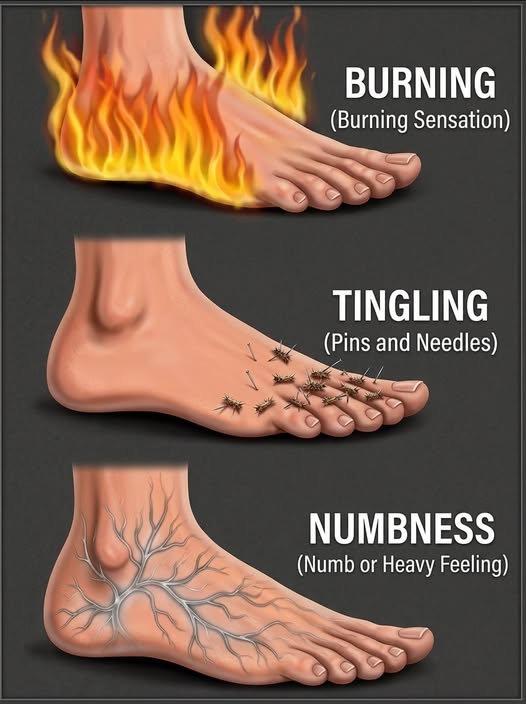
2. 🔥 Burning or Tingling Feet
A persistent burning, prickling, or “pins and needles” sensation can result from nerve problems (neuropathy).
Diabetes is a common cause, but vitamin deficiencies, alcohol use, certain medications, and other neurological conditions can also contribute.
Don’t ignore persistent symptoms, particularly if they are getting worse.
3. 🩹 A Wound That Won’t Heal
A cut, blister, or sore that doesn’t heal normally deserves attention.
Poor circulation and diabetes can interfere with wound healing and increase the risk of infection.
People with diabetes should be especially careful about checking their feet regularly.
4. 🧊 Feet That Are Unusually Cold
Cold feet aren’t always a problem—some people simply have poor tolerance for cold temperatures.
But feet that remain unusually cold, particularly when accompanied by pain, numbness, skin-color changes, or weak pulses, can sometimes indicate reduced blood circulation.
5. 🎨 Sudden Changes in Skin Color
Notice your toes turning unusually pale, blue, purple, or red?
Changes in color can sometimes reflect problems with circulation.
A sudden, severe change—especially when accompanied by pain, numbness, or a cold foot—should be evaluated promptly.
6. 💅 Dark or Changing Toenails
A dark toenail is often caused by trauma, such as repeatedly hitting your toe against the inside of a shoe.
However, a new dark streak or patch under a toenail without an obvious injury should be examined by a healthcare professional.
Rarely, melanoma can develop under a nail, so unexplained changes shouldn’t simply be ignored.
7. 👣 Severe Heel Pain
Heel pain is frequently caused by conditions such as plantar fasciitis or Achilles tendon problems.
But severe, persistent, or worsening pain—particularly if it follows an injury or makes walking difficult—deserves an appropriate evaluation rather than being repeatedly ignored.
8. 🦴 A Suddenly Painful, Red, Swollen Joint
A joint that suddenly becomes intensely painful, swollen, and red may be caused by gout, an infection, or another inflammatory condition.
Don’t assume it’s simply a minor foot problem.
If you develop sudden severe joint pain with fever or feel generally unwell, seek urgent medical care.
9. 🧠 New or Increasing Numbness
Numbness can result from something as simple as pressure on a nerve, but persistent or progressive numbness can indicate nerve damage or circulation problems.
If numbness suddenly develops along with weakness, facial drooping, difficulty speaking, severe dizziness, or other neurological symptoms, call emergency services immediately.
🚨 When Should You Get Help?
A useful rule is:
New + sudden + severe = don’t wait.
Seek prompt medical attention for symptoms such as:
- A cold, pale, blue, or severely painful foot
- Sudden one-sided leg swelling
- A rapidly spreading infection
- A wound with increasing redness, warmth, pus, or fever
- Sudden numbness or weakness
- Severe pain after an injury
❤️ Don’t Ignore What Your Feet Are Telling You
Your feet aren’t a diagnostic window into every disease—but persistent changes can sometimes reveal that something needs attention.
Regularly checking your feet, wearing properly fitting shoes, keeping wounds clean, and seeking medical advice when something doesn’t look or feel right can help prevent small problems from becoming serious ones.
🦶 Your feet work hard for you every day. Give them a little attention in return.