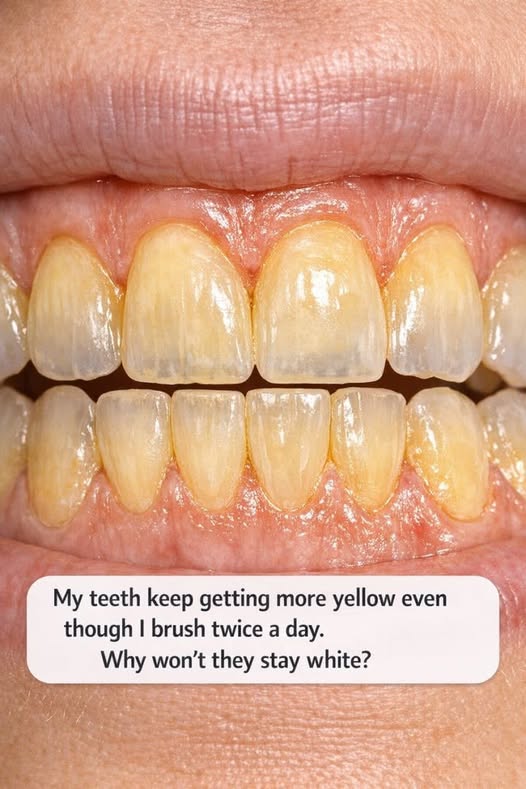
It’s incredibly frustrating when you’re putting in the work—brushing like a pro twice a day—and yet your teeth seem to be leaning into a “vintage” shade of yellow.
The truth is, brushing is only half the battle. While it removes plaque, it can’t always combat internal changes or the chemical nature of certain habits. Here is a breakdown of why your teeth might be changing color and what you can actually do about it.
Why “Clean” Teeth Can Still Look Yellow
1. The Thinning Enamel Trap
This is the most common reason for people who have great hygiene. Your tooth is made of two main layers:
-
Enamel: The hard, white outer shell.
-
Dentin: The naturally yellowish, bony tissue underneath.
As you age—or if you brush too hard (abrasive scrubbing)—your enamel thins out. When that white “shield” gets thinner, the yellow dentin underneath starts to show through more clearly.
2. The “Stain” Usual Suspects
Even if you brush immediately after, certain molecules called chromogens love to latch onto tooth enamel. Common culprits include:
-
Coffee and Black Tea: These contain tannins that settle into the “pores” of your teeth.
-
Red Wine and Soda: The acidity in these drinks softens enamel, making it easier for pigments to stick.
-
Spices: Frequent consumption of turmeric or deep-colored sauces (like soy or balsamic) can cause gradual staining.
3. Surface vs. Intrinsic Stains
-
Extrinsic: These are on the surface. Brushing helps here, but it doesn’t always “deep clean” the microscopic pits in your enamel.
-
Intrinsic: This is staining inside the tooth structure. This can be caused by certain medications (like tetracycline), excessive fluoride during childhood, or even minor dental trauma. Brushing will never fix intrinsic yellowing.
How to Pivot Your Routine
If brushing twice a day isn’t cutting it, consider these tactical shifts:
Adjust Your Technique
-
Wait after eating: If you eat something acidic (like citrus or soda), wait 30–60 minutes before brushing. Acid softens enamel; brushing immediately can actually scrub your enamel away.
-
Switch to an Electric Brush: Most people scrub too hard with a manual brush. Electric brushes often have pressure sensors to ensure you aren’t “sanding down” your pearly whites.
The “Rinse Rule”
If you can’t brush after coffee or a meal, rinse your mouth with water. This neutralizes the pH and washes away the pigments before they have a chance to set.
Professional Intervention
-
Professional Cleaning: A dental hygienist uses a “prophy cup” and gritty paste that removes “biofilm” and stains that a standard toothbrush simply cannot touch.
-
Whitening Treatments: Over-the-counter strips work for mild extrinsic stains, but if your yellowing is due to thin enamel or internal staining, you’ll need a professional-grade peroxide treatment from a dentist.
A Quick Reality Check: Natural teeth are rarely “paper white.” A slight off-white or light ivory hue is actually a sign of healthy, thick enamel. If your teeth are healthy and your dentist says your enamel is strong, you might just be fighting against your natural genetics!