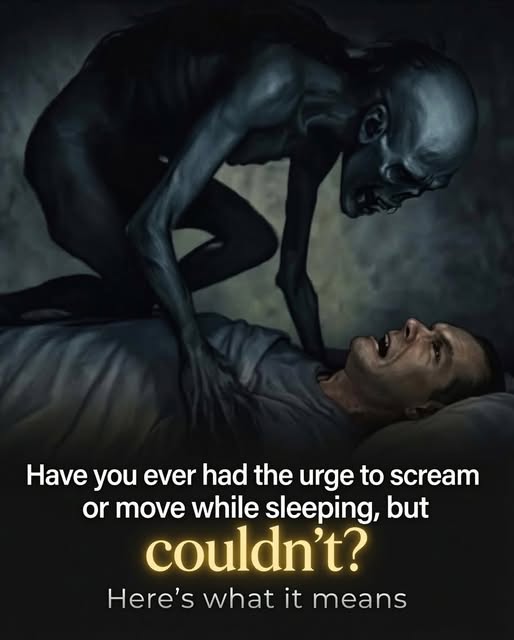
🌙 Understanding Sleep Paralysis: The Science Behind Nocturnal Immobility
Imagine waking up in the middle of the night, completely aware of your surroundings—but unable to move.
You try to sit up.
You try to speak.
You may even feel as though someone is standing nearby.
But your body doesn’t respond.
For anyone experiencing it for the first time, sleep paralysis can be absolutely terrifying. Yet despite how frightening it feels, the phenomenon has a scientific explanation and is usually temporary. 🧠✨
😴 What Exactly Is Sleep Paralysis?
Sleep paralysis occurs when a person becomes conscious while the body is still experiencing the temporary muscle paralysis associated with REM (rapid eye movement) sleep.
During REM sleep, the brain naturally reduces activity in most voluntary muscles. This process, called REM atonia, helps prevent us from physically acting out our dreams.
Sometimes, however, awareness returns before that muscle paralysis has completely disappeared.
The result can be a strange state in which you’re awake enough to recognize your surroundings but temporarily unable to move or speak.
👁️ Why Do People See or Hear Things?
One of the most unsettling aspects of sleep paralysis is the possibility of vivid hallucinations.
Some people report seeing a shadowy figure.
Others hear footsteps, voices, breathing, or unexplained sounds.
Some experience a sensation of pressure on their chest or feel as though someone is in the room.
These experiences can seem completely real because parts of the dreaming brain may still be active while the person is becoming conscious.
In other words, the brain can be caught between dreaming and waking.
⏰ How Long Does It Last?
An episode can feel much longer than it actually is.
Sleep paralysis generally lasts from a few seconds to several minutes before normal movement returns.
Although the experience can be frightening, the paralysis itself is temporary.
🧩 What Can Trigger Sleep Paralysis?
Sleep paralysis can happen to anyone, but certain circumstances may make it more likely.
These include:
- 💤 Not getting enough sleep
- 🕰️ Irregular sleep schedules
- 😰 High levels of stress
- ✈️ Jet lag or major changes in sleeping patterns
- 🛏️ Sleeping on your back
- Certain sleep disorders or other underlying conditions
For some people, episodes happen only once. Others may experience them repeatedly.
❤️ What Should You Do During an Episode?
If sleep paralysis happens to you, remembering what is happening can make the experience less frightening.
Try to stay calm and remind yourself:
“This is temporary. My body is still transitioning out of REM sleep.”
Rather than struggling to move your entire body, some people find it helpful to concentrate on slow breathing or attempting a tiny movement, such as moving a finger or toe.
Once the episode ends, give yourself a moment to fully wake up before trying to return to sleep.
🌿 Can Sleep Paralysis Be Prevented?
Good sleep habits may reduce the likelihood of episodes.
Try maintaining a consistent sleep and wake schedule, getting enough sleep, managing stress, and creating a comfortable sleep environment.
If episodes happen frequently, interfere with your sleep, or are accompanied by significant daytime sleepiness or other unusual symptoms, it’s worth discussing them with a healthcare professional.
🌙 The Takeaway
Sleep paralysis can feel mysterious—even supernatural—but science provides a compelling explanation.
Your mind may awaken before your body has completely exited the muscle paralysis of REM sleep.
That brief mismatch between wakefulness and REM sleep can produce an experience that feels incredibly vivid and frightening.
So if you’ve ever woken up unable to move, remember: you aren’t necessarily in danger.
Your brain and body may simply be waking up at slightly different speeds.
And sometimes, understanding what’s happening is the first step toward making the experience much less frightening. 🌙💙