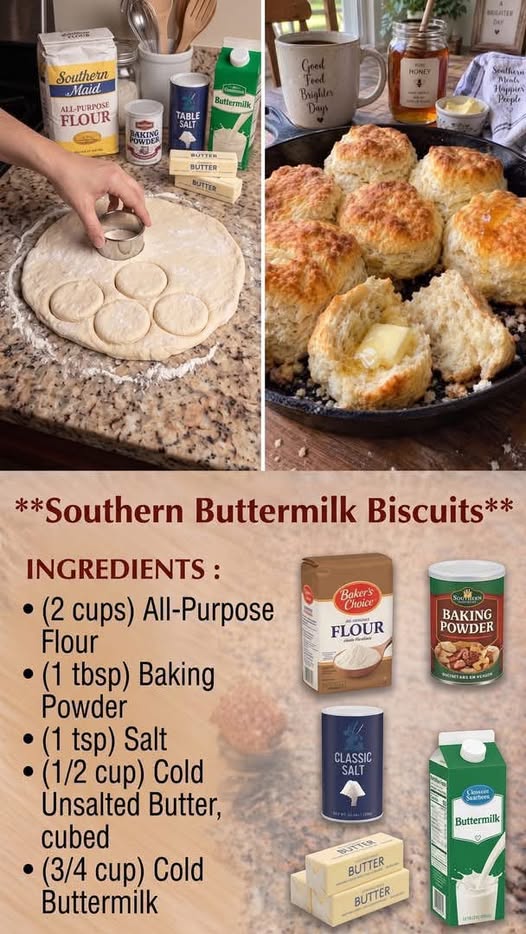
Chef John’s Buttermilk Biscuits
Introduction
Chef John’s Buttermilk Biscuits are everything you want in a classic homemade biscuit: tall, flaky, buttery, tender, and beautifully golden on top. The secret is keeping the butter cold, handling the dough gently, and using a light touch when folding and cutting.
These biscuits are perfect for breakfast with butter and jam, served alongside fried chicken or sausage gravy, or enjoyed fresh from the oven with a little honey. They come together with simple pantry ingredients and don’t require any special equipment.
Prep Time
- Prep Time: 15 minutes
- Bake Time: 15–18 minutes
- Total Time: About 30–35 minutes
- Servings: 8–10 biscuits
Equipment
- Large mixing bowl
- Pastry cutter or fork
- Measuring cups and spoons
- Rolling pin
- 2½–3-inch round biscuit cutter
- Baking sheet
- Parchment paper
- Pastry brush
Ingredients
For the Biscuits
- 2 cups all-purpose flour
- 2 teaspoons baking powder
- ½ teaspoon baking soda
- 1 teaspoon salt
- 6 tablespoons cold unsalted butter, cut into small cubes
- 1 cup cold buttermilk, plus a little extra if needed
- 1 tablespoon melted butter, for brushing the tops
Ingredient Notes
Cold butter: This is one of the most important ingredients for flaky biscuits. Keep the butter refrigerated until you’re ready to use it.
Buttermilk: Use cold buttermilk for the best texture. Its acidity also reacts with the baking soda to help the biscuits rise.
All-purpose flour: Regular all-purpose flour works well. Avoid packing the flour tightly into the measuring cup.
Butter: Unsalted butter lets you control the amount of salt in the recipe.
Instructions
1. Preheat the Oven
Preheat your oven to 425°F (220°C).
Line a baking sheet with parchment paper or lightly grease it.
2. Combine the Dry Ingredients
Add the flour, baking powder, baking soda, and salt to a large bowl.
Whisk everything together until evenly combined.
3. Cut in the Cold Butter
Add the cold cubed butter.
Using a pastry cutter, fork, or your fingertips, work the butter into the flour until the mixture resembles coarse crumbs with some pea-sized pieces of butter still visible.
Don’t completely blend the butter into the flour. Those little pieces of cold butter help create flaky layers as the biscuits bake.
4. Add the Buttermilk
Pour the cold buttermilk into the flour mixture.
Gently stir with a fork or spatula until the dough just comes together.
The dough should look somewhat rough and shaggy. Don’t overmix it.
If the dough seems unusually dry, add another tablespoon of buttermilk at a time until it holds together.
5. Turn Out the Dough
Lightly flour your work surface.
Turn the dough onto the surface and gently bring it together with your hands.
Avoid kneading the dough like bread. Too much handling can make the biscuits tough.
6. Create the Layers
Gently flatten the dough into a rectangle or thick round.
Fold the dough in half, then gently flatten it again.
Repeat this folding process 2–3 times.
This creates layers in the dough, helping the biscuits rise tall and develop a flaky interior.
7. Roll and Cut
Gently roll or pat the dough to approximately ¾-inch to 1-inch thick.
Use a floured biscuit cutter to cut out the biscuits.
Press the cutter straight down and lift it straight back up. Don’t twist the cutter, because twisting can seal the edges and interfere with the biscuits rising.
Place the biscuits close together on the prepared baking sheet for softer sides, or leave a little space between them for crispier edges.
8. Brush With Butter
Brush the tops lightly with melted butter.
For especially tall biscuits, you can place the baking sheet in the refrigerator for about 10 minutes before baking. This helps keep the butter cold.
9. Bake
Place the biscuits in the preheated oven.
Bake for approximately 15–18 minutes, or until the tops are golden brown and the biscuits have risen nicely.
Keep an eye on them during the final few minutes because oven temperatures can vary.
10. Serve Warm
Remove the biscuits from the oven and brush the tops with a little additional melted butter if desired.
Let them cool for just a few minutes.
Serve warm with butter, honey, jam, gravy, or your favorite breakfast toppings.
How to Get Tall, Flaky Biscuits
The biggest secrets are cold ingredients and gentle handling.
Keep the butter and buttermilk cold. When the cold butter hits the hot oven, it melts and creates steam, helping separate the layers of dough.
Also, avoid overworking the dough. A slightly rough-looking biscuit dough is usually better than a perfectly smooth one.
The folding technique is another important step. Folding the dough creates multiple layers without requiring complicated pastry techniques.
Tips for Perfect Biscuits
- Keep the butter cold until you’re ready to use it.
- Use cold buttermilk.
- Don’t overmix the dough.
- Leave some small pieces of butter visible in the dough.
- Don’t twist the biscuit cutter.
- Don’t use excessive flour when shaping the dough.
- Bake in a fully preheated oven.
- For softer sides, place biscuits close together.
- For crispier edges, space them farther apart.
- Handle leftover dough as little as possible.
Variations
Honey Buttermilk Biscuits
Add 1–2 tablespoons of honey to the buttermilk before mixing it into the dough. These are delicious with butter.
Cheddar Biscuits
Fold about 1 cup of shredded sharp cheddar cheese into the dough before shaping.
Herb Biscuits
Add 1 tablespoon of chopped fresh herbs such as parsley, chives, rosemary, or thyme.
Garlic Butter Biscuits
Brush the hot biscuits with melted butter mixed with a little garlic powder and chopped parsley.
Sweet Breakfast Biscuits
Add 1–2 tablespoons of sugar to the dry ingredients and serve the finished biscuits with berries and whipped cream.
Serving Ideas
These buttermilk biscuits pair wonderfully with:
- Sausage gravy
- Fried chicken
- Scrambled eggs
- Bacon and eggs
- Country ham
- Honey butter
- Strawberry jam
- Peach preserves
- Apple butter
- Sausage and cheese
- Chicken pot pie filling
Storage
Store completely cooled biscuits in an airtight container at room temperature for up to 2 days.
For longer storage, place them in an airtight freezer-safe container or bag and freeze for up to 3 months.
To reheat, place frozen biscuits in a 350°F (175°C) oven until warmed through. You can also microwave an individual biscuit briefly, although the oven gives the best texture.
Make-Ahead Instructions
You can prepare the shaped, unbaked biscuits ahead of time.
Place them on a baking sheet, cover well, and refrigerate for several hours before baking.
You can also freeze the unbaked biscuits. Freeze them in a single layer until firm, then transfer them to a freezer bag.
Bake directly from frozen, adding a few extra minutes to the normal baking time.
Nutrition Facts
Approximate nutrition per biscuit, depending on size:
- Calories: 220
- Carbohydrates: 27g
- Protein: 4g
- Fat: 11g
- Saturated Fat: 7g
- Cholesterol: 30mg
- Sodium: 400mg
- Sugar: 2g
Nutrition information is an estimate and will vary depending on the exact ingredients and serving size.
Final Thoughts
There’s something special about homemade buttermilk biscuits straight from the oven. They’re simple enough for a weekday breakfast but comforting enough for a weekend Southern-style meal.
The key is not to make the dough perfect—keep the butter cold, work quickly, fold gently, and don’t overmix. Those simple steps produce biscuits with crisp golden edges, tender centers, and plenty of flaky layers.