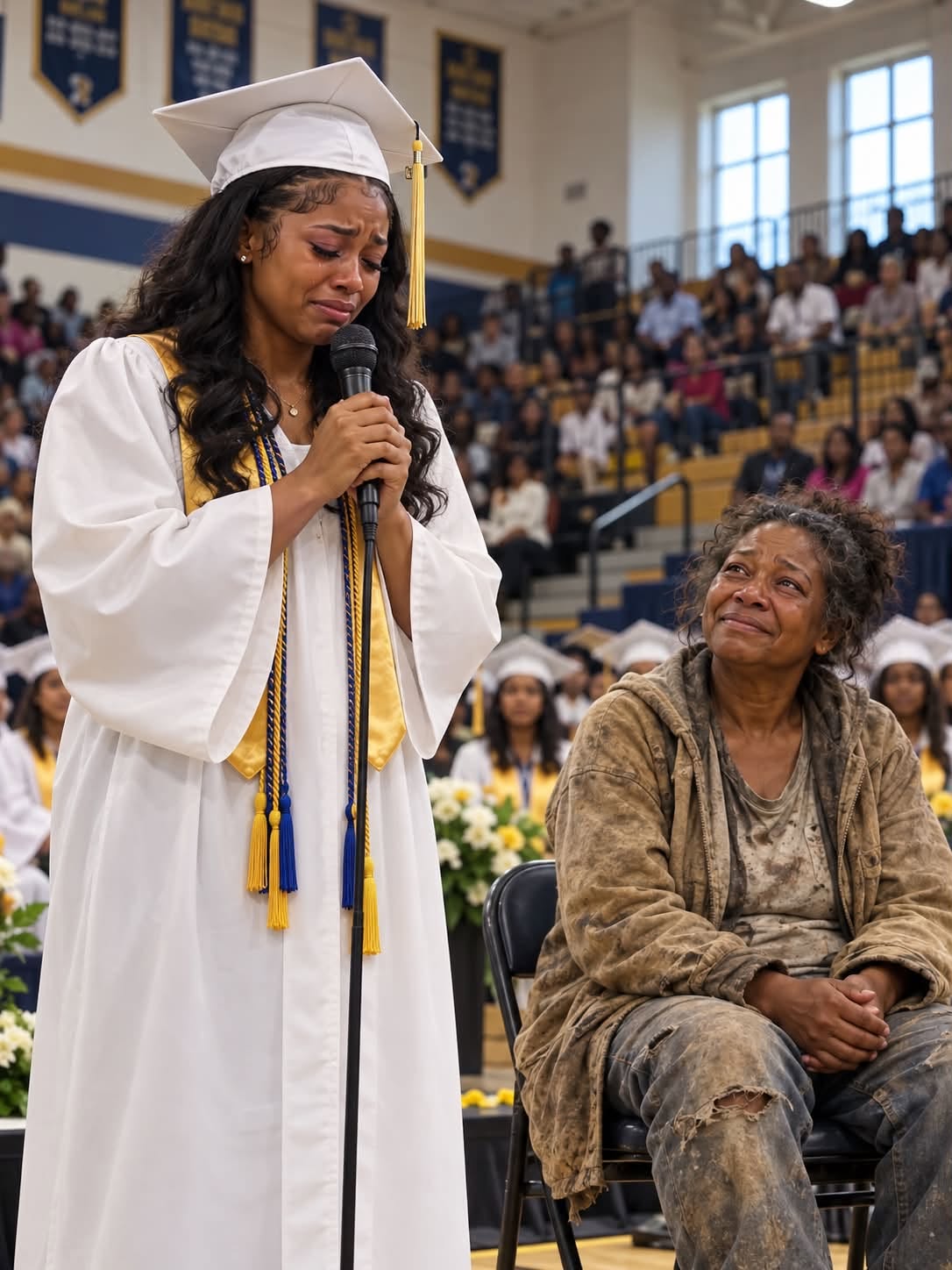
The gym stayed dead silent, suspended on every word. I looked straight at Madison, then at her mother, Evelyn Haverford, sitting two rows back in a custom linen suit.
I took a deep breath, looked at the crowd, and said into the microphone:
“What none of you know is that for twelve years, my mother wasn’t just collecting cans for us—she was using every single cent to pay off the medical debt and house payments of five families in this town after a local factory laid them off, including the Haverfords.”
A collective gasp rippled through the room.
I kept my eyes fixed on the audience. “Three years ago, I found her ledger hidden under the sink. Every quarter, every nickel, every scraped-together dollar went straight to an anonymous bank transfer to keep Madison’s family in their home when her father lost his job, and to pay for four other families’ prescriptions when they had nowhere else to turn. My mom lived on dry bread so other people’s kids could bring hot lunches to school.”
In the back row, Evelyn Haverford’s face went completely pale. Her jaw trembled. She looked at her daughter, then turned around to look at my mother, whose hands were still folded tightly in her lap.
Before anyone could say a word, Evelyn rose to her feet. Tears streamed down her face as she began to clap—slowly at first, then furiously.
Within seconds, the principal stood up. Then the teachers. Then four hundred parents and students surged to their feet, the roar of applause shaking the gym rafters, drowning out twelve years of cruelty with a wall of sound.
Madison sat frozen in her seat, staring at her mother in disbelief, while Evelyn walked straight down the center aisle, took my mother’s calloused, shaking hands into her own, and wept.