The first call took five minutes. It was to the bank manager who had managed my accounts for twenty-two years, the man who remembered when I brought a little three-year-old boy into his branch to open a junior savings account with fifty pounds.
“Eileen,” he said softly, after I explained what needed to be done. “If I pull the personal guarantee on his business credit line, his merchant processing will freeze at midnight. Every transaction for his boutique firm will bounce by morning.”
“Do it, David,” I said, my voice as steady as granite. “And cancel the standing order.”
“The $3,500 monthly transfer to his wedding venue fund?”
“Cancel it immediately. And recall the pending transfer for the honeymoon suite.”
The second call was to my landlord—because the two-bedroom flat in West Kensington where my son, James, and his new bride were planning to live after their honeymoon wasn’t leased by James. It was in my name, paid six months in advance using the small annuity my late sister had left me.
“Mr. Higgins,” I said into the phone, watching the white wedding marquee glow against the vineyard hills. “I’m exercising the early termination clause on the lease. I’ll be picking up the keys tomorrow morning, and I want the locks changed by noon.”
“Eileen, is everything alright?” Mr. Higgins asked, stunned. “James told me last week you were signing the tenancy over to him as a wedding gift.”
“James was mistaken,” I replied. “I’m returning the keys to the agency.”
By 8:30 p.m., the Sun was dipping below the horizon, casting deep purple shadows across the manicured vineyard. Inside the glass-walled reception hall, the laughter was loud, the champagne was flowing, and the bride’s father—a wealthy regional developer who had spent four years looking down his nose at my old coat—was standing at the head table preparing to give his toast.
I stepped out of my old sedan, adjusted the blue dress I had saved two years to buy, and walked back up the gravel path.
This time, the girl at the check-in table didn’t stop me. She was too busy staring at her tablet, where an urgent alert had just flashed from the venue’s billing system: Primary Payment Method Revoked – Immediate Settlement Required.
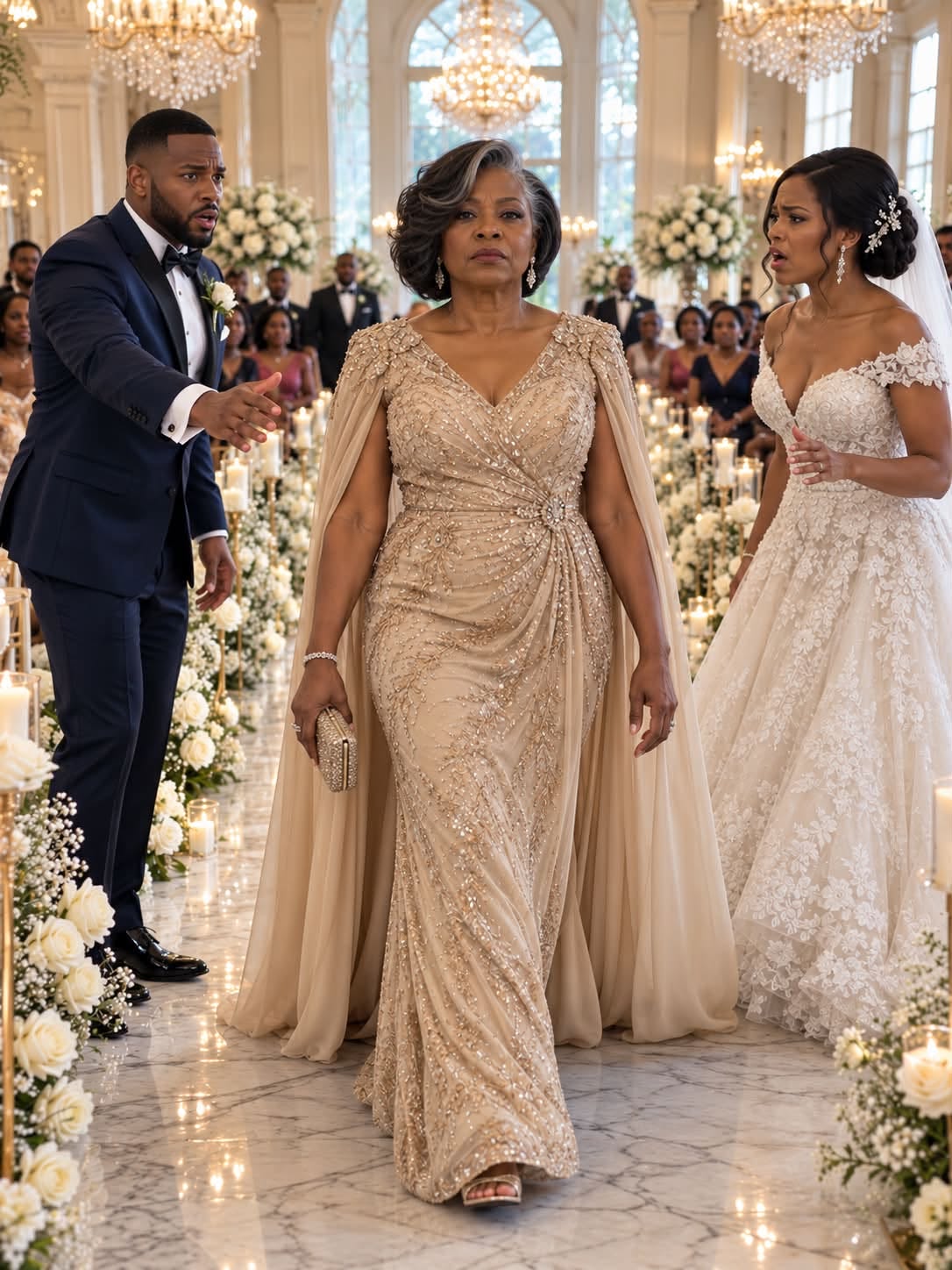
I pushed open the double glass doors and walked right into the middle of the ballroom.
The room went quiet as I walked past the floral arches and the towering ice sculpture. My son, standing at the main table with a crystal glass in his hand, froze mid-sentence. His bride’s smile vanished, replaced by pure, ugly fury.
“What is she doing back here?” his bride snapped, turning to her father. “Dad, tell security to get her out! She’s ruining our photos!”
Her father stood up, buttoning his suit jacket with a sneer. “Listen here, lady—”
“Before you call security, Mr. Vance,” I said, my voice carrying clearly across the silent room, “you might want to check your phone. The venue manager is currently walking over to this table with an unpaid invoice for $28,000.”
My son’s face drained of every drop of color. “Mom… what did you do?”
“Don’t call me Mom,” I said softly, looking him dead in the eye. “After all, as you told your bride’s family, I was just a temporary foster placement, wasn’t I?”
I turned to the bride’s father, who was staring at his phone in absolute disbelief as notifications began piling up.
“Mr. Vance,” I continued, “your daughter has spent four years telling everyone that James comes from old money and that his firm was backed by private investors. The truth is, his entire business exists because my house was put up as collateral. His flat is paid for by my pension. And the $3,500 monthly allowance he’s been using to buy her designer bags came directly from my bank account.”
Gasps rippled across the surrounding tables. Guests lowered their glasses, staring at the head table in horror.
“James,” I said, stepping closer to my son, who looked like he was about to vomit onto his polished dress shoes. “I pulled my guarantee ten minutes ago. The bank is freezing your corporate account, the lease on your flat is terminated as of tomorrow, and the venue manager needs someone else’s credit card to cover the rest of this party.”
“Mom… please,” James choked out, taking a desperate step toward me, his hands shaking. “You can’t do this to me! It’s my wedding day!”
“You didn’t want a mother today, James,” I said, holding my head high as I handed him the small, handwritten letter I had carried from my car—the letter detailing the day I picked him up from the foster office in 2001, when he was three years old, wearing torn shoes, asking if anyone would ever keep him.
“You wanted an image,” I whispered, stepping back from the table. “So now you can pay for it.”
I turned my back on my son, his crying bride, and her furious father, and walked out of the ballroom into the cool evening air.
Behind me, the music stopped, the shouting began, and for the first time in twenty-two years, I breathed a completely clean, free breath.