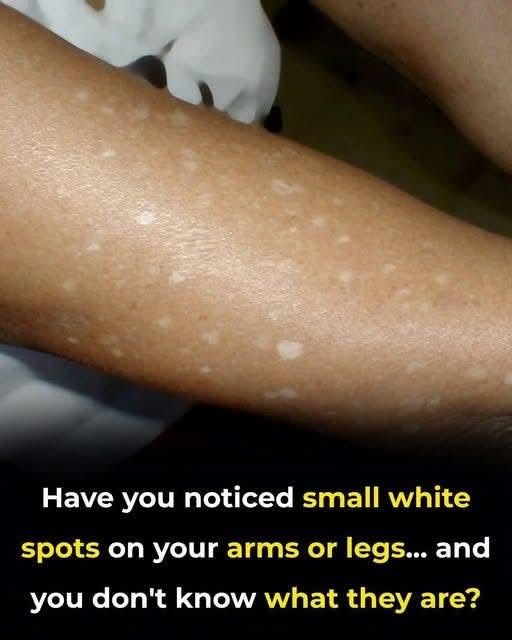
Small white spots on the arms and legs are common and are often harmless, but they can sometimes indicate an underlying skin condition. If the spots are changing, spreading rapidly, or accompanied by other symptoms, it’s a good idea to have them evaluated by a healthcare professional.
Common Causes
1. Idiopathic Guttate Hypomelanosis (IGH)
One of the most common causes of small white spots, especially in adults over 40.
Signs:
- Tiny, flat white spots (2–5 mm)
- Usually appear on the forearms, shins, and other sun-exposed areas
- Not itchy or painful
Cause:
The exact cause isn’t known, but long-term sun exposure and aging are thought to contribute.
2. Tinea Versicolor
A common fungal skin infection caused by an overgrowth of yeast that normally lives on the skin.
Signs:
- White, pink, or light brown patches
- May have fine scaling
- Can be mildly itchy
- More common in warm, humid climates
Treatment:
Antifungal creams, shampoos, or medications can help, but the skin color may take weeks or months to return to normal after the infection is treated.
3. Vitiligo
A condition in which pigment-producing cells are lost, leading to well-defined white patches.
Signs:
- Smooth, sharply defined white patches
- May gradually enlarge
- Can occur anywhere on the body
A dermatologist can confirm the diagnosis and discuss treatment options.
4. Dry Skin or Eczema
Dry skin and certain forms of eczema can leave lighter patches after inflammation has healed.
Signs:
- Dryness
- Mild itching
- Rough or flaky skin
Keeping the skin moisturized and treating eczema can help.
5. Post-Inflammatory Hypopigmentation
Lighter spots can appear after the skin heals from inflammation, such as:
- Rashes
- Minor burns
- Insect bites
- Cuts or scrapes
These areas often regain pigment over time, although it can take several months.
When to See a Doctor
Make an appointment if the spots:
- Spread quickly
- Change in size or appearance
- Are associated with pain, significant itching, redness, or bleeding
- Develop after a new medication
- Are accompanied by other unexplained symptoms such as weight loss, fever, or fatigue
- Cause concern or don’t improve
A healthcare professional may examine your skin and, if needed, recommend tests to determine the cause.
Self-Care Tips
- Use sunscreen with SPF 30 or higher to protect exposed skin.
- Moisturize daily if your skin is dry.
- Avoid scratching or picking at the spots.
- Wear protective clothing during prolonged sun exposure.
- If you suspect a fungal infection, avoid sharing towels and keep your skin clean and dry.
Common Myths
- Myth: All white spots are caused by a vitamin deficiency.
Fact: While nutritional deficiencies can occasionally affect skin pigmentation, most small white spots are caused by other skin conditions. - Myth: White spots are always contagious.
Fact: Most causes, such as IGH and vitiligo, are not contagious.
Bottom Line
Most small white spots on the arms and legs are not dangerous, but they can have different causes that require different treatments. Because it’s difficult to identify the cause based on appearance alone, it’s best to seek medical advice if the spots are new, changing, widespread, or causing symptoms. Early evaluation can help you get the most appropriate treatment if one is needed.