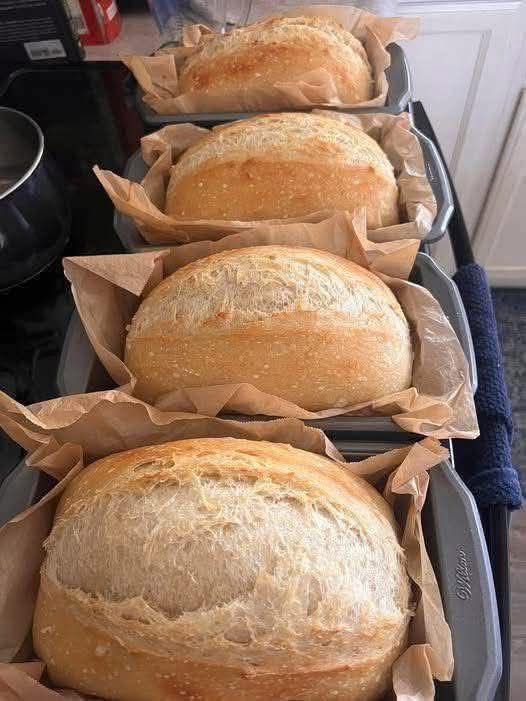
Sourdough is the “Main Event” of the baking world. It’s not just a recipe; it’s a relationship with a living organism. For your site, this is the ultimate “Slow Living” post.
While your Brown Butter Banana Bread was about instant gratification, sourdough is about patience, gut health, and that unmistakable artisan “crunch.”
Sourdough for Beginners: The Art of the Slow Ferment
Sourdough is unique because it doesn’t use commercial yeast. Instead, it relies on Wild Yeast and Lactic Acid Bacteria. This long fermentation process breaks down much of the gluten and phytic acid, making it significantly easier to digest than standard white bread.
🏺 The “Starter” (The Soul of the Bread)
Before you bake, you need a Starter (naturally fermented flour and water).
-
The Science: The bacteria in the starter (Lactobacillus) create the sour tang, while the wild yeast provides the lift.
-
The Health Angle: This fermentation acts as a “pre-digestion” step. For readers who feel bloated after eating normal bread, sourdough is often the “safe” alternative.
📋 The “No-Knead” Master Recipe
This is the most reliable method for beginners. It relies on “stretch and folds” rather than intense kneading.
Ingredients:
-
100g Active, bubbly Sourdough Starter (fed 4–12 hours prior)
-
350g Warm Water
-
500g Bread Flour (high protein is best for structure)
-
10g Fine Sea Salt
Instructions:
-
The Mix: Whisk your starter and water in a large bowl. Add flour and salt. Mix by hand until a shaggy ball forms. Cover with a damp cloth and let rest for 30 minutes (this is the autolyse).
-
Stretch and Fold: Instead of kneading, grab one side of the dough, pull it up high, and fold it over itself. Do this 4 times (rotating the bowl). Repeat this every 30 minutes for 2 hours (4 sets total).
-
Bulk Fermentation: Cover and let the dough sit on the counter until it grows by about 50–75% in size. This can take 4 to 10 hours depending on the temperature of your kitchen.
-
Shape: Gently turn the dough onto a floured surface. Fold the edges into the center to create a tight ball (boule). Place it upside down in a floured bowl or proofing basket.
-
The Cold Overnight Proof: Put the bowl in the fridge for 12–24 hours. This cold rest is where that signature “sour” flavor develops!
-
The Bake: Preheat a Dutch Oven at 450°F (230°C). Score the top of the dough with a sharp blade. Bake with the lid on for 20 minutes (this traps steam for a great crust), then lid off for 20–25 minutes until golden brown.
💡 Why This Article is Gold for Your Site
-
Gut Health Hero: Link this to your Garlic-Oregano Tea posts. Sourdough is a prebiotic food that supports a healthy microbiome.
-
Blood Sugar Balance: Sourdough has a lower Glycemic Index than most breads. It’s the “Smart Carb” choice.
-
The Aesthetic: Sourdough “scoring” (the patterns cut into the top) makes for incredibly beautiful, shareable photos for your social media.
🛠️ Essential Sourdough Gear
If your readers are ready to commit, these tools make the process much more consistent:
-
Lodge 6-Quart Enameled Cast Iron Dutch Oven: The essential tool for getting a “bakery-style” crispy crust at home.
-
Bread Banneton Proofing Basket Set: Helps the dough maintain its shape and creates those beautiful flour rings on the crust.