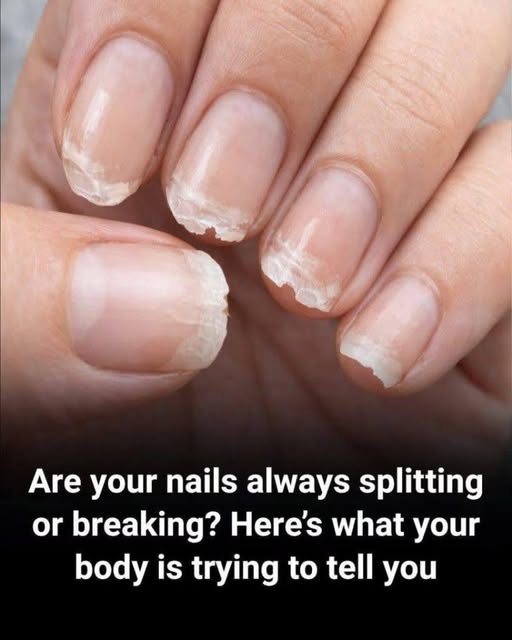
Brittle or Fragile Nails: What Your Body May Be Trying to Tell You
Brittle, peeling, splitting, or unusually fragile nails are common—and they don’t always mean something is seriously wrong.
Sometimes the explanation is surprisingly simple: frequent handwashing, cleaning products, nail polish remover, repeated exposure to water, or simply getting older can gradually weaken the nail.
But occasionally, changes in your nails can provide a clue that something else deserves attention.
1. Your Nails May Simply Be Dry
Nails can become brittle when they repeatedly lose moisture.
Frequent washing, hot water, detergents, and household cleaning products can all contribute. Nail polish remover, particularly products containing strong solvents, may also make nails feel dry and prone to splitting.
A simple first step is to moisturize your hands and nails regularly, especially after washing.
2. Aging Can Change Your Nails
As we get older, nails often grow more slowly and may become thinner, drier, or more fragile.
This is a normal part of aging for many people.
That means brittle nails in an older adult don’t automatically indicate a vitamin deficiency or disease.
3. Your Diet May Need Attention
Nails are made largely of keratin, a protein, so adequate nutrition is important for normal nail growth.
In some people, nutritional deficiencies—including iron deficiency—can be associated with nail changes.
Other nutritional problems may affect the nails as well, particularly when someone’s diet is very restrictive or inadequate.
However, brittle nails alone are not enough to diagnose a deficiency.
Taking high-dose supplements without knowing whether you actually need them isn’t necessarily helpful and can sometimes be harmful.
4. Thyroid Problems Can Sometimes Affect Nails
Changes in thyroid function can be associated with changes in hair, skin, and nails.
If fragile nails occur alongside symptoms such as unusual fatigue, unexplained weight changes, feeling unusually cold or hot, changes in heart rate, or significant hair loss, it may be worth discussing the combination with a healthcare professional.
5. Certain Nail Conditions Can Look Like Simple Brittleness
Fungal nail infections and inflammatory skin conditions such as psoriasis can alter the appearance and texture of nails.
Look for additional signs such as:
- Thickening
- Yellow or white discoloration
- Crumbling
- Separation of the nail from the nail bed
- Pitting or small depressions
- Persistent changes affecting several nails
These may require a proper examination rather than home treatment.
6. Your Everyday Habits Matter
If your nails have recently become fragile, consider what has changed.
Have you started washing your hands more frequently?
Are you using cleaning chemicals without gloves?
Have you begun using gel manicures or acrylic nails?
Are you frequently removing and reapplying polish?
Do your hands spend long periods submerged in water?
Sometimes identifying the trigger is more useful than searching for a single “nail-strengthening” ingredient.
What You Can Do at Home
Try giving your nails a gentler routine for several weeks:
Keep them reasonably short. Longer nails are more likely to catch and split.
Moisturize regularly. Apply hand cream or a simple moisturizer to the nails and surrounding skin.
Wear protective gloves. Especially when washing dishes or handling household cleaners.
Avoid aggressive filing. File gently in one direction rather than repeatedly sawing back and forth.
Give damaged nails a break. Consider reducing artificial nails, gel manicures, and frequent polish removal if you notice worsening brittleness.
And maintain a varied diet containing adequate protein, vegetables, fruits, whole grains, and sources of iron and other essential nutrients.
When Should You See a Doctor?
Make an appointment if nail changes are persistent, severe, unexplained, or accompanied by other symptoms.
It’s particularly worth getting checked if several nails suddenly change, the nails become very thin or distorted, you develop significant discoloration or pain, or you also have symptoms such as unexplained fatigue, weight changes, hair loss, or changes in your skin.
A clinician can determine whether you simply need better nail care or whether testing for an underlying problem makes sense.
The Bottom Line
Fragile nails are often caused by dryness, repeated exposure to water or chemicals, cosmetic treatments, or normal aging.
Sometimes, however, they can accompany nutritional deficiencies, thyroid disorders, skin diseases, infections, or other health problems.
So rather than assuming that brittle nails automatically mean you’re missing a particular vitamin, look at the whole picture.
Your nails can offer clues—but they’re only one small piece of the story of your health.