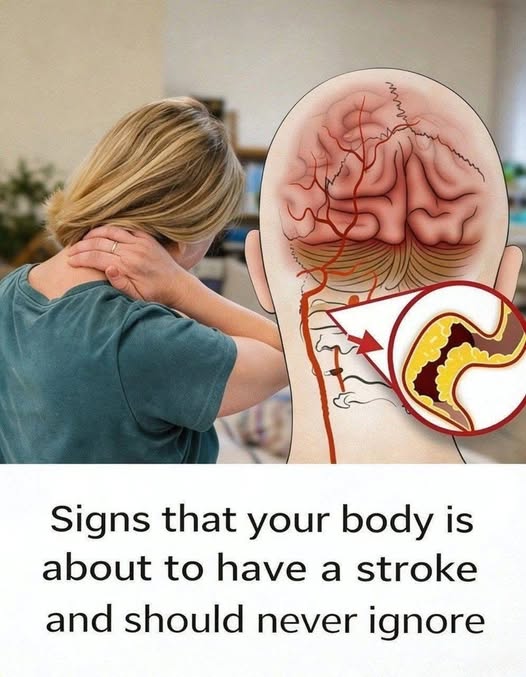
🚨 10 Early Warning Signs of a Stroke Everyone Should Know
A stroke can happen suddenly, and every minute matters. When blood flow to part of the brain is interrupted—or a blood vessel in the brain ruptures—brain cells can begin to suffer damage very quickly. Recognizing the warning signs and getting emergency treatment immediately can reduce the risk of lasting disability. (CDC)
Here are important symptoms everyone should know. 🧠❤️
1. 😕 Sudden Confusion
A person may suddenly seem confused, have trouble understanding what others are saying, or struggle to make sense of a conversation.
A sudden change is particularly important to notice.
2. 🗣️ Sudden Trouble Speaking
Speech may suddenly become slurred, strange, or difficult to understand.
Someone who normally communicates clearly may suddenly struggle to form words or sentences.
3. 🙂 One Side of the Face Droops
Ask the person to smile.
Does one side of the face appear lower or numb?
Facial drooping is one of the classic warning signs of stroke. (CDC)
4. 💪 Sudden Weakness or Numbness
Sudden weakness or numbness in the face, arm, or leg, particularly on one side of the body, is a major warning sign.
Ask the person to raise both arms. If one arm drifts downward, seek emergency help immediately.
5. 👁️ Sudden Vision Problems
A stroke can cause sudden difficulty seeing in one or both eyes.
Vision may become blurred, doubled, partially blocked, or otherwise abnormal.
Don’t assume a sudden vision change is simply tiredness or aging.
6. 🚶 Sudden Difficulty Walking
Someone having a stroke may suddenly become unsteady or have difficulty walking normally.
They may stumble, lose coordination, or suddenly feel unable to control their movements.
7. 🌀 Sudden Dizziness or Loss of Balance
Unexpected dizziness, loss of balance, or difficulty coordinating movements can be a stroke symptom—particularly when it begins suddenly or occurs alongside other neurological symptoms. (NIH Neurological Disorders)
8. 🤕 A Sudden, Severe Headache
A sudden, extremely severe headache with no known cause can be a warning sign, particularly if it is accompanied by other neurological symptoms.
A severe headache can have many causes, but a sudden unexplained one should never be casually dismissed.
9. 🤢 Sudden Nausea, Vomiting, or Other Neurological Changes
Some people with stroke—particularly certain types of stroke—may experience nausea, vomiting, double vision, unusual drowsiness, or other sudden neurological changes.
These symptoms aren’t as specific as facial drooping or arm weakness, but when they appear suddenly, they deserve urgent evaluation. (NIH Neurological Disorders)
10. ⚡ Symptoms That Suddenly Appear and Then Disappear
This is especially important.
If stroke-like symptoms disappear after a few minutes, don’t assume everything is fine.
It could be a transient ischemic attack (TIA), sometimes called a “mini-stroke.” A TIA is a serious warning that a major stroke could follow and requires urgent medical assessment. (CDC)
🧠 Remember B.E. F.A.S.T.
A simple way to remember major stroke symptoms is B.E. F.A.S.T.:
B — Balance: Sudden loss of balance or coordination
E — Eyes: Sudden vision changes
F — Face: Does one side of the face droop?
A — Arms: Is one arm weak or drifting downward?
S — Speech: Is speech slurred or unusual?
T — Time: Call emergency services immediately. (CDC)
🚑 Don’t Drive Yourself to the Hospital
If you suspect a stroke, call your local emergency medical service immediately rather than driving yourself or having someone drive you.
Emergency medical personnel can begin care while transporting the person, and the hospital can prepare for the patient’s arrival. (CDC)
Also, note the exact time the symptoms first appeared—or the last time the person was known to be well. This information can help doctors determine which treatments may be appropriate. (CDC)
❤️ The Most Important Rule
Don’t wait to see whether the symptoms improve.
Sudden facial drooping, arm weakness, speech difficulty, vision problems, severe unexplained headache, or sudden trouble walking can be an emergency.
When it comes to stroke, acting quickly can make a profound difference. 🧠🚑
If these symptoms are happening right now, seek emergency medical help immediately rather than continuing to read or trying to diagnose the cause yourself.