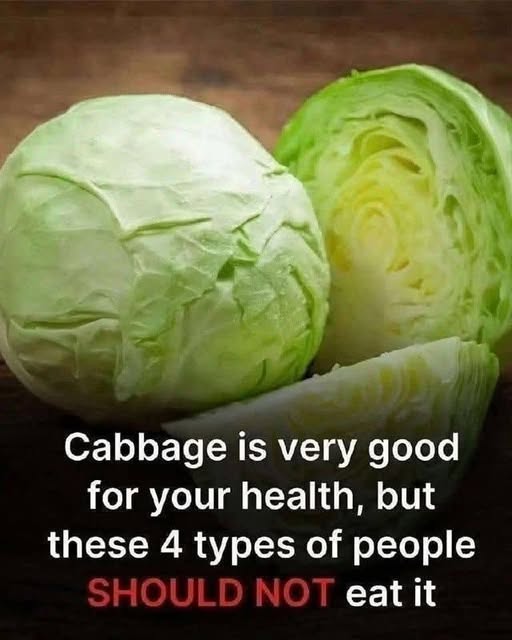
🥬 4 Types of People Who May Need to Limit Cabbage
Cabbage is packed with nutrients, fiber, and beneficial plant compounds, making it a healthy addition to many diets. 🥗
But like almost any food, it isn’t ideal for everyone in every situation.
For some people, eating large amounts of cabbage may worsen digestive symptoms or interfere with certain medical treatments. Here are four groups who may need to be cautious.
1. 🤰 People Who Experience Significant Digestive Problems
Cabbage contains fiber and carbohydrates that can be fermented by gut bacteria.
For people with sensitive digestion, eating a large serving may cause gas, bloating, abdominal discomfort, or changes in bowel habits.
That doesn’t necessarily mean cabbage has to be eliminated. Smaller portions, thorough cooking, and gradually increasing fiber intake may be better tolerated.
2. 🩺 People Taking Certain Blood-Thinning Medication
Cabbage—particularly green and other leafy varieties—contains vitamin K, which plays an important role in blood clotting.
People taking warfarin or similar vitamin-K-sensitive anticoagulants generally don’t need to avoid cabbage altogether, but they should aim for a consistent intake of vitamin K rather than suddenly eating very large quantities or eliminating it completely.
If you’re taking an anticoagulant, ask your healthcare professional about your individual diet.
3. 🦋 People With Certain Thyroid Conditions
Cabbage belongs to the cruciferous vegetable family, which contains naturally occurring compounds sometimes called goitrogens.
For most people, eating normal amounts of cooked cruciferous vegetables isn’t considered a problem.
However, people with certain thyroid conditions—particularly those with inadequate iodine intake—may want to discuss very large amounts of raw cruciferous vegetables with their healthcare professional.
Cooking cabbage can reduce some of these compounds. 🍲
4. 💊 People With Specific Medical or Dietary Restrictions
Anyone who has been given a medically prescribed diet should consider that advice before dramatically increasing cabbage intake.
This can include people managing particular digestive disorders, recovering from gastrointestinal procedures, or following an individualized therapeutic diet.
The important point is that “healthy” doesn’t mean “right for everyone in unlimited amounts.”
🥬 So, Should You Stop Eating Cabbage?
For most people, no.
Cabbage provides fiber, vitamins, minerals, and other beneficial plant compounds. The bigger issue is usually portion size, preparation, individual tolerance, and medication interactions rather than cabbage itself being dangerous.
If cabbage consistently causes symptoms—or if you’re taking medication that can interact with dietary vitamin K—talk with a qualified healthcare professional instead of eliminating foods based on internet advice.
💚 A healthy diet isn’t about finding foods that are universally good or bad. It’s about finding what works safely for your own body.