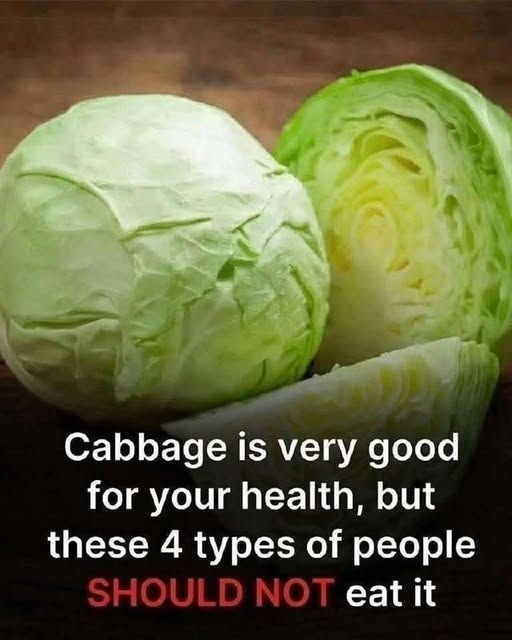
🥬 4 Types of People Who May Need to Limit or Avoid Cabbage
Cabbage is a nutritious vegetable packed with fiber, vitamin C, vitamin K, and other beneficial plant compounds. For most people, it’s a perfectly healthy addition to meals.
But cabbage isn’t ideal for everyone in every situation. Certain people may need to limit it, prepare it differently, or discuss their intake with a healthcare professional. 🌿
1. 🦋 People Taking Certain Thyroid Medications
Cabbage belongs to the cruciferous vegetable family, along with broccoli, cauliflower, and Brussels sprouts.
These vegetables contain compounds known as goitrogens, which can interfere with thyroid hormone production under certain circumstances. However, normal amounts of cooked cruciferous vegetables are generally not considered a problem for most people with adequate iodine intake.
If you have thyroid disease, there’s usually no need to eliminate cabbage completely, but very large amounts—particularly raw cabbage—may warrant discussion with your doctor.
2. 💊 People Taking Warfarin
Cabbage contains vitamin K, which plays an important role in blood clotting.
People taking the blood thinner warfarin generally don’t need to avoid vitamin-K-rich foods altogether. Instead, the key is keeping vitamin K intake consistent from day to day so medication dosing can be managed safely.
If you take warfarin, don’t suddenly start eating large amounts of cabbage without discussing dietary changes with your healthcare provider.
3. 💨 People Prone to Gas and Bloating
Cabbage contains fiber and carbohydrates that can be fermented by gut bacteria.
For some people, particularly those with sensitive digestion or irritable bowel syndrome, eating a large portion may cause:
- 💨 Gas
- 🎈 Bloating
- 😣 Abdominal discomfort
- 🚽 Changes in bowel habits
If cabbage bothers you, try a smaller serving, cook it thoroughly, and see whether your symptoms improve.
4. 🩺 People With Specific Digestive Conditions
If you have a gastrointestinal condition that requires a low-fiber or restricted diet, raw cabbage may not be appropriate during certain periods.
Likewise, people recovering from some gastrointestinal procedures or experiencing an active digestive flare may need to temporarily modify their diet.
Your doctor or registered dietitian can tell you whether cabbage fits into your particular eating plan.
🌱 Does This Mean Cabbage Is Unhealthy?
Absolutely not.
For most healthy people, cabbage is an inexpensive and nutrient-rich vegetable that can be enjoyed regularly.
The problem is usually the individual circumstances, the quantity eaten, or the way it is prepared—not cabbage itself.
🍲 A Simple Tip
If raw cabbage causes discomfort, try steaming, sautéing, or lightly cooking it. Cooking can make cabbage easier for some people to digest.
And if you’re taking medication or managing a medical condition, don’t automatically eliminate nutritious foods based on an internet list. Ask your healthcare professional how much is appropriate for you.
💚 The Bottom Line
Cabbage doesn’t belong on a universal “do not eat” list.
But people taking warfarin, those with certain thyroid concerns, individuals who experience significant digestive symptoms, and people following medically prescribed diets may need to pay particular attention to how much cabbage they consume.
Healthy eating isn’t about labeling foods as good or bad—it’s about finding what works safely for your individual body and circumstances. 🥬✨