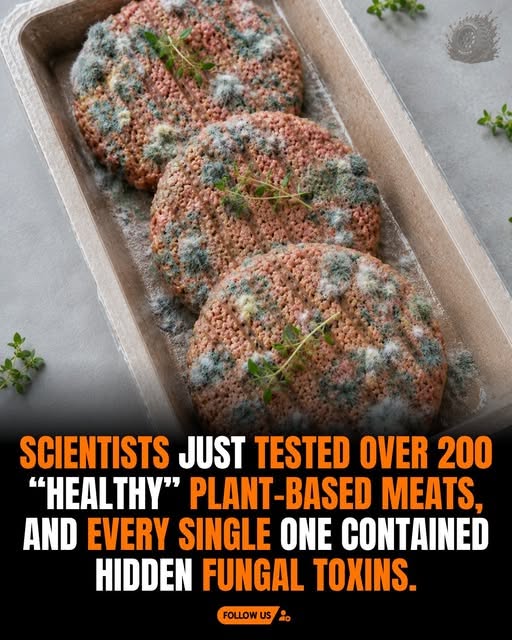
🌱⚠️ A New Study Raises Questions About “Healthy” Plant-Based Foods
Plant-based meat alternatives and dairy-free drinks have become increasingly popular, often marketed as convenient choices for people looking to eat more plant foods.
But a recent scientific investigation has raised an important question:
Could some plant-based products contain unwanted substances that consumers rarely think about?
Researchers from Cranfield University and the University of Parma examined 212 plant-based food and drink products purchased from supermarkets, looking for mycotoxins—naturally occurring toxins that can be produced by certain molds.
🔬 What Are Mycotoxins?
Mycotoxins aren’t unique to vegan or vegetarian foods.
They can develop in agricultural commodities such as grains, cereals, nuts, and other crops when conditions during farming, harvesting, transportation, or storage allow certain molds to grow.
Because ingredients such as grains and soy are commonly used in plant-based foods, researchers are interested in understanding how these contaminants may appear in processed products.
The important question isn’t simply whether a toxin is detected.
It’s how much is present, how frequently people consume it, and whether exposure reaches levels that could pose a meaningful health risk.
⚠️ Why Long-Term Exposure Matters
Some mycotoxins can affect human health, particularly when exposure is high or occurs repeatedly over long periods.
Depending on the specific toxin, excessive exposure has been associated with effects involving organs such as the liver and kidneys, as well as other biological systems.
That doesn’t mean every product containing a detectable amount is immediately dangerous.
Dose matters.
Exposure matters.
And the specific toxin matters.
This distinction is important because headlines about contaminants can easily make a scientific finding sound much more frightening than the underlying evidence actually shows.
🛒 What Does This Mean for Consumers?
The findings highlight a broader issue in modern food production.
As demand for highly processed plant-based foods grows, scientists and regulators need reliable systems for monitoring contaminants throughout the food supply chain.
That includes checking raw agricultural ingredients, improving storage conditions, and ensuring finished products meet established safety standards.
For consumers, there’s no need to panic over a single food product simply because it is plant-based.
Instead, the research is a reminder that “plant-based” and “healthy” aren’t automatically synonymous—and neither does the presence of a detectable contaminant automatically mean a food is unsafe.
🌱 A balanced diet can include plenty of plant foods, while food manufacturers and regulators continue working to keep those foods as safe as possible.
The bigger lesson may be this:
When it comes to food safety, the most important questions aren’t just what was detected—but how much, how often, and what the evidence says about the actual risk. 🔬