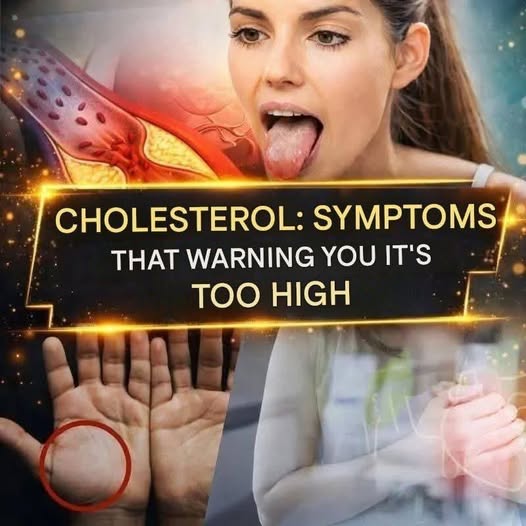
🫀 Cholesterol: 5 Warning Signs That Could Mean Your Levels Are Too High
High cholesterol is often called a “silent” condition because it usually doesn’t cause noticeable symptoms on its own.
That makes routine blood testing especially important. However, very high cholesterol can sometimes be associated with visible physical signs, particularly when cholesterol deposits build up in the body.
Here are five signs worth knowing about. 👇
1. 🟡 Yellowish Bumps or Patches on the Skin
Some people with very high cholesterol—especially inherited forms such as familial hypercholesterolemia—can develop xanthomas.
These are cholesterol-rich deposits that may appear as yellowish bumps or patches, often around joints, tendons, or other parts of the skin.
They aren’t proof of high cholesterol by themselves, but they deserve medical evaluation.
2. 👁️ A Gray or White Ring Around the Cornea
A pale gray or white ring around the outer edge of the cornea is called corneal arcus.
It can occur naturally with aging and doesn’t necessarily mean someone has high cholesterol.
However, when it appears unusually early in life, particularly before age 40, it can be associated with inherited high cholesterol and should be discussed with a doctor.
3. 👀 Yellowish Deposits Around the Eyes
Small yellowish cholesterol deposits around the eyelids are known as xanthelasma.
They’re usually harmless themselves, but they can sometimes occur in people with abnormal cholesterol levels.
If you notice new yellow patches around your eyes, consider mentioning them to your healthcare professional.
4. ❤️ Chest Pain or Pressure
High cholesterol itself doesn’t normally cause chest pain.
The concern is what high cholesterol can contribute to over time.
Excess LDL cholesterol can contribute to plaque buildup inside arteries. If the arteries supplying the heart become narrowed, symptoms such as chest pressure, pain, or shortness of breath can occur.
⚠️ Sudden or severe chest pain, especially with sweating, nausea, or difficulty breathing, requires emergency medical attention.
5. 🚶 Pain or Cramping in the Legs While Walking
Atherosclerosis can also affect arteries supplying the legs.
When blood flow becomes restricted, a person may experience pain, aching, or cramping in the legs during walking that improves with rest. This is known as intermittent claudication.
Again, this isn’t a direct symptom of cholesterol itself—it’s a possible sign of artery disease associated with plaque buildup.
🩸 The Most Important “Symptom” Is Actually a Blood Test
This is the part many people overlook.
You can have very high cholesterol and feel completely normal.
That’s why waiting for symptoms isn’t a reliable way to find out whether your cholesterol is elevated.
A lipid panel can measure:
- LDL cholesterol (“bad” cholesterol)
- HDL cholesterol
- Triglycerides
- Total cholesterol
Your doctor can interpret these results alongside your age, blood pressure, diabetes status, smoking history, family history, and other cardiovascular risk factors.
💚 Don’t Wait for Your Body to Send a Warning
High cholesterol usually doesn’t announce itself with pain or obvious symptoms.
The best protection is knowing your numbers and managing your overall cardiovascular risk.
Eat a heart-healthy diet, stay physically active, avoid smoking, and take cholesterol-lowering medication if your healthcare professional recommends it.
🫀 Sometimes the most important warning sign of high cholesterol is the absence of warning signs at all.