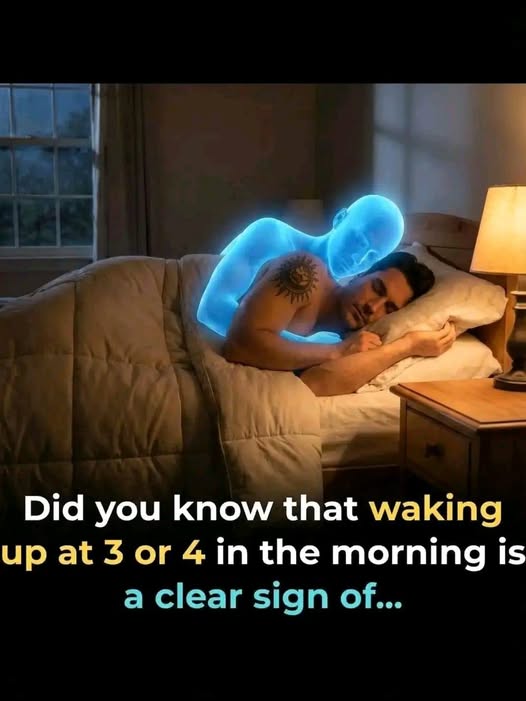
The internet loves to claim that waking up at 3:00 or 4:00 AM is a “spiritual awakening” or a sign that someone is watching you. While that makes for a great ghost story, the reality is usually a mix of biology and sleep architecture.
In medical terms, this is often called Middle-of-the-Night Insomnia. Here is what is actually happening in your body during those early morning hours:
1. The 4:00 AM Blood Sugar Dip
This is one of the most common physical triggers. If you ate a high-carb dinner or had alcohol before bed, your blood sugar spikes and then crashes a few hours later.
-
The Reaction: When blood sugar drops too low, your body releases cortisol and adrenaline to help stabilize it.
-
The Result: Those hormones are “alertness” chemicals. They jolt your brain into a state of hyper-arousal, making you feel wide awake and often anxious.
2. The Shift in Sleep Cycles
We don’t sleep in one long, solid block. We sleep in 90-minute cycles that move from deep sleep to Light/REM sleep.
-
The Pattern: Most of our “Deep Sleep” happens in the first half of the night (11:00 PM – 2:00 AM).
-
The Result: Around 3:00 or 4:00 AM, you transition into much lighter REM sleep. In this stage, it is incredibly easy for a small noise, a slight change in room temperature, or a full bladder to wake you up completely.
3. Chronic Stress (The “Cortisol Slope”)
Normally, your cortisol levels are at their lowest around midnight and begin to rise naturally around 4:00 AM to prepare you to wake up for the day.
-
The Glitch: If you are chronically stressed, your “baseline” cortisol is already high. When that natural early-morning rise begins, it pushes you over the threshold of sleep and into full wakefulness prematurely.
4. Alcohol’s “Rebound Effect”
Alcohol is a sedative that helps you fall asleep fast, but it’s a “dirty” sleep.
-
The Process: As your liver finishes processing the alcohol (usually 3–5 hours after your last drink), your body undergoes a mini-withdrawal. This creates a “rebound” in the nervous system, causing you to wake up suddenly, often feeling sweaty or restless.
How to Stay Asleep
If you find yourself staring at the ceiling at 3:30 AM, try these “Derm-and-Doc” approved tips:
-
Don’t check the clock: Knowing it’s 3:14 AM triggers “math anxiety” (calculating how few hours you have left), which spikes your heart rate.
-
The “Cool Down”: Keep your room at 18°C (65°F). A drop in core body temperature is the primary signal for your brain to stay in a deep sleep state.
-
Protein Snack: If you suspect blood sugar is the culprit, have a small high-protein snack (like a spoonful of peanut butter) before bed to keep levels steady.