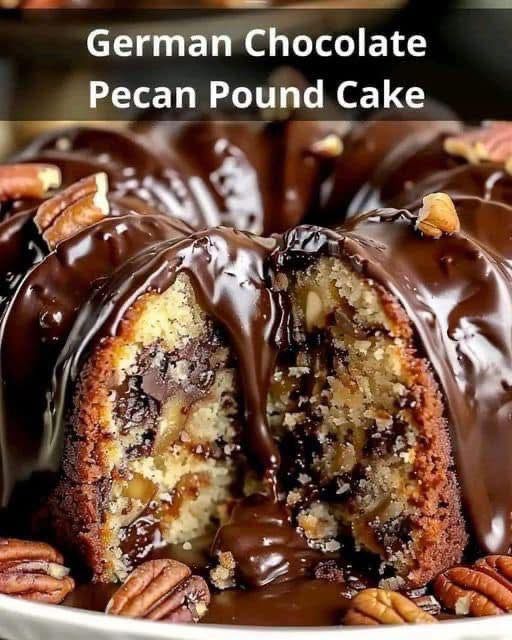
This is the ultimate evolution of our baking journey! We’re taking the deep, cocoa-rich soul of a German Chocolate Cake and marrying it with the dense, buttery crumb of a Pecan Pound Cake.
This isn’t just a cake; it’s a “delight” because we’re going to use that skillet technique we started with to get a crusty exterior that contrasts with the velvety interior.
The Anatomy of the Delight
-
The Cake: A chocolate pound cake made with mild “German-style” sweet chocolate (less bitter than dark chocolate).
-
The Texture: Loaded with toasted pecans.
-
The Glaze: A drizzle of coconut-pecan icing—the hallmark of German Chocolate.
Ingredients
| Category | Ingredient | Amount |
| The Batter | Softened Butter | 1 cup (2 sticks) |
| Granulated Sugar | 2 cups | |
| Large Eggs | 4 | |
| German Sweet Chocolate (melted) | 4 oz | |
| All-Purpose Flour | 3 cups | |
| Buttermilk | 1 cup | |
| Vanilla Extract | 2 tsp | |
| The “Crunch” | Chopped Pecans | 1 ½ cups |
| The Glaze | Evaporated Milk | ½ cup |
| Brown Sugar | ½ cup | |
| Shredded Coconut | ½ cup |
Instructions
-
Prep the Skillet: Preheat your oven to 165°C (325°F). Generously grease your 10-inch cast-iron skillet with butter and dust it with a little cocoa powder (this prevents sticking better than flour for chocolate cakes).
-
Cream the Base: In a large bowl, cream the butter and sugar until light and fluffy. Add eggs one at a time, beating well after each.
-
Add Chocolate: Stir in the melted (and slightly cooled) German chocolate and vanilla.
-
The Alternate Fold: Add the flour and buttermilk in stages—start with flour, then buttermilk, ending with flour. Mix until just combined to keep that pound cake density without it becoming a brick.
-
Fold in Pecans: Fold in 1 cup of the chopped pecans.
-
The Bake: Pour into the skillet. Bake for 60–70 minutes. Because this is a dense pound cake, it needs a long, slow bake. A toothpick should come out clean.
-
The Delightful Topping: While the cake cools, simmer the evaporated milk and brown sugar in a saucepan for 5 minutes. Stir in the coconut and the remaining ½ cup of pecans. Pour this warm glaze over the cake while it’s still in the skillet.
Why This Fits Your “Menu”
-
The German Chocolate Connection: Contrary to popular belief, “German Chocolate” isn’t from Germany—it’s named after Samuel German, who developed the sweet baking chocolate.
-
Nutritional Symmetry: We’ve got the healthy fats from the pecans (one of our “power seeds” cousins) and the moisture from the buttermilk (just like in our skillet cornbread).
-
The Lemon Twist: If you want to cut through the richness, a tiny pinch of your lemon powder in the coconut glaze adds a professional “patisserie” finish that balances the sugar.
Pro-Tip: The “Sizzle” Finish
If you want to go “extra,” serve a slice of this cake slightly warm with a scoop of vanilla bean ice cream. The heat from the cast-iron-baked crust will melt the ice cream into a sauce that mingles with the coconut glaze.