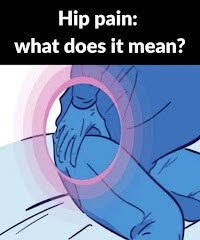
Hip Pain: What Does It Mean? 🦴
Hip pain can be frustrating, especially when it seems to appear without warning. A dull ache after a long day, stiffness when you get out of bed, or sharp pain while walking can all feel very different—but each may provide clues about what is happening.
The good news is that most hip pain has a manageable cause. Still, persistent or severe pain shouldn’t simply be ignored.
📍 Where You Feel the Pain Matters
The location of your pain can sometimes offer an important clue.
Pain in the groin or inside of the hip is more likely to involve the hip joint itself. Pain on the outer hip, upper thigh, or outer buttock can involve muscles, tendons, ligaments, or bursae around the joint. Pain can also be referred from another area, particularly the lower back.
That’s why saying simply “my hip hurts” doesn’t tell the whole story.
🏃 Common Reasons Your Hip May Hurt
1. Muscle Strain or Overuse
A sudden increase in exercise, repetitive movements, lifting, or an awkward movement can strain the muscles and tendons surrounding the hip.
This type of pain may improve with modified activity and time.
2. Arthritis
Osteoarthritis becomes increasingly common with age and can cause pain, stiffness, and reduced movement, particularly when walking or after periods of activity. Rheumatoid arthritis and other inflammatory conditions can also affect the hip.
If your hip feels particularly stiff after resting or when you first get up in the morning, arthritis may be one possibility worth discussing with a healthcare professional.
3. Bursitis
Around the hip are small fluid-filled sacs called bursae that help reduce friction between tissues.
When one becomes irritated, you may experience pain on the outside of the hip, particularly when lying on that side or moving in certain ways.
4. Tendinitis
Tendons connect muscles to bones. Repetitive activity or overuse can irritate them, producing pain that becomes more noticeable with movement.
5. A Problem Coming From Your Back
Not every “hip” problem actually starts in the hip.
Conditions involving the lower back or irritated nerves can send pain into the buttock, hip, thigh, or leg. Sciatica is one example.
6. An Injury or Fracture
Falls, accidents, or direct blows can damage the hip. A fracture is particularly important to consider after a fall in older adults or people with weakened bones.
Severe pain accompanied by an inability to walk or put weight on the leg requires prompt medical attention.
🌙 Why Does My Hip Hurt More at Night?
Nighttime hip pain can have several explanations.
Sleeping directly on a painful outer hip may put pressure on irritated tissues. Arthritis or other chronic conditions may also become more noticeable when you’re lying still.
If hip pain is repeatedly disturbing your sleep, that’s a good reason to discuss it with a healthcare professional rather than simply putting up with it.
🧊 What Can You Do for Mild Hip Pain?
For minor pain that isn’t associated with a serious injury, simple measures may help:
- Reduce activities that aggravate the pain without becoming completely inactive.
- Apply an ice pack wrapped in a towel for short periods.
- Avoid sleeping directly on the painful side.
- Try gentle movement and stretching if it doesn’t increase your pain.
- Avoid heavy lifting while the hip is irritated.
- Wear comfortable, supportive shoes.
For some people, over-the-counter pain medicines may also help, but they aren’t appropriate for everyone. If you’re unsure which medicine is safe for you, ask a pharmacist or healthcare professional.
🚨 When Should Hip Pain Be Taken Seriously?
Don’t wait for ordinary home treatment if you have warning signs.
Seek urgent medical attention if you:
- Have severe hip pain after a fall or injury
- Cannot walk or put weight on the affected leg
- Cannot move the hip or leg normally
- Notice sudden swelling or an obvious deformity
- Develop severe pain suddenly
- Have a hot, swollen hip accompanied by fever, chills, or feeling unwell
These symptoms can indicate problems such as a fracture, dislocation, or joint infection and need prompt assessment.
🩺 When Is It Time to See a Doctor?
Even when the pain isn’t an emergency, don’t ignore it if it’s becoming a regular part of your life.
Consider getting medical advice if the pain:
- Keeps coming back
- Is getting worse
- Interferes with normal activities
- Regularly disrupts your sleep
- Hasn’t improved after about two weeks of home care
- Is accompanied by persistent stiffness
A healthcare professional can examine the hip, back, and surrounding muscles and determine whether further testing or treatment is needed.
❤️ Listen to What Your Hip Is Telling You
Hip pain doesn’t automatically mean something is seriously wrong. Sometimes the cause is simply overuse, a strained muscle, or temporary irritation.
But persistent pain is your body’s way of asking for attention.
Pay attention to where the pain occurs, what makes it worse, how long it lasts, and whether it affects your ability to walk or sleep. Those details can help a healthcare professional understand what’s happening and guide the right treatment.
Your hip carries you through countless steps every day. When it starts asking for help, it’s worth listening. 🦴💙
This article is for general information and isn’t a diagnosis. Persistent, severe, or unexplained hip pain should be assessed by a qualified healthcare professional.