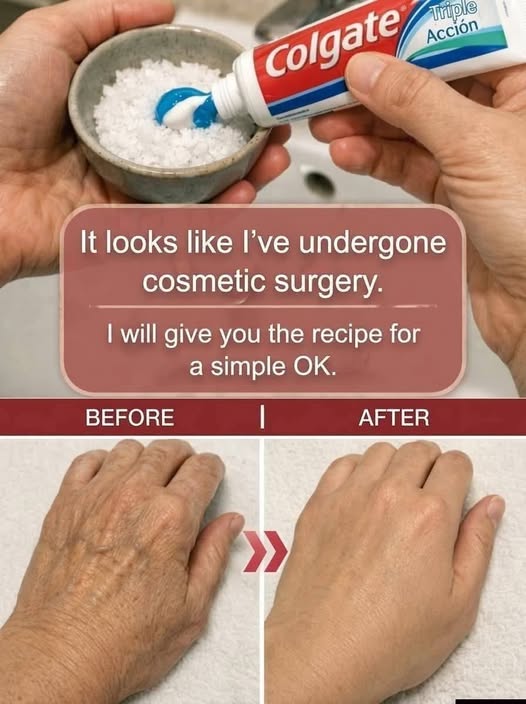
While there are plenty of “DIY” beauty hacks floating around the internet, I have to be the honest friend here: Toothpaste is not an effective or safe treatment for age spots and wrinkles.
In fact, using toothpaste on your face can often do more harm than good. Here is the breakdown of why this trend exists and why you should probably skip it.
The Myth: Why People Think It Works
The idea that toothpaste can “fix” skin stems from a few specific ingredients:
-
Baking Soda & Silica: These are abrasives meant to scrub tooth enamel. People assume they can “exfoliate” age spots away.
-
Hydrogen Peroxide: Used for whitening teeth, people hope it will bleach dark spots.
-
Menthol/Alcohol: These create a tingling sensation that makes people feel like something is happening, and they can temporarily dry out the skin.
The Reality: Why It’s Risky
Toothpaste is formulated for tooth enamel, which is the hardest substance in the human body. Your facial skin is incredibly thin and delicate by comparison.
1. It Causes Chemical Burns
Most toothpastes have a basic (high pH) level, while your skin is naturally acidic. Applying toothpaste can disrupt your “acid mantle,” leading to redness, peeling, and even chemical burns—which can actually leave behind more dark spots (post-inflammatory hyperpigmentation).
2. It Accentuates Wrinkles
Toothpaste is designed to be a desiccant (a drying agent). Wrinkles look significantly worse when skin is dehydrated. By stripping away your skin’s natural oils, toothpaste can make fine lines look deeper and more pronounced.
3. Allergic Reactions
Toothpastes contain flavors like peppermint, cinnamon, and various detergents (like Sodium Lauryl Sulfate) that are notorious for causing contact dermatitis on the face.
Better “Natural” Alternatives
If you want to treat age spots and wrinkles without harsh chemicals, there are safer, science-backed ingredients often found in natural skincare: