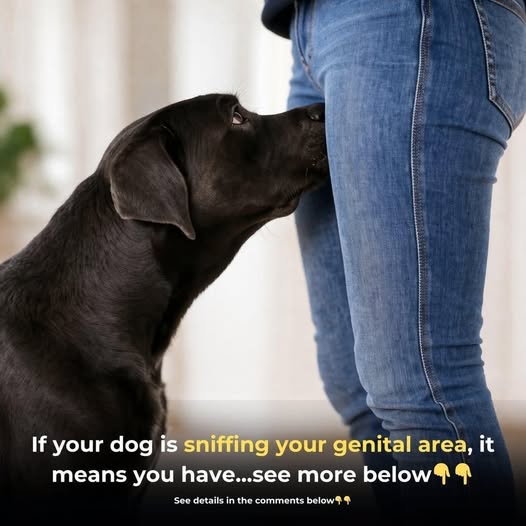
If Your Dog Sniffs Your Genital Area, Does It Mean You Have a Health Problem?
It can certainly feel embarrassing when your dog suddenly becomes very interested in your genital area. But in most cases, it does not mean that you have a disease or serious health problem.
Dogs experience the world largely through their sense of smell. Their noses contain vastly more scent receptors than ours, allowing them to detect subtle changes in body odor that humans barely notice.
🐶 Why Does Your Dog Do This?
Your genital area naturally contains numerous scent-producing glands. Dogs may be particularly interested because the area has a strong and distinctive odor.
Your scent can also change because of:
- Menstruation
- Sweating or exercise
- Hormonal fluctuations
- Changes in personal hygiene products
- Sexual activity
- Pregnancy
- Certain foods or medications
Simply noticing a change in your scent doesn’t mean something is wrong.
Can Dogs Detect Illness?
There is some scientific evidence that trained dogs can detect certain chemical changes associated with particular medical conditions. However, this is very different from saying that an ordinary pet dog sniffing you has diagnosed a disease.
Your dog may be reacting to an unfamiliar smell rather than identifying a specific medical problem.
🚩 When Should You Pay Attention?
If you notice a new or persistent change in your own symptoms, that’s more meaningful than your dog’s behavior.
Consider speaking with a healthcare professional if you experience symptoms such as unusual discharge, persistent itching, sores, unexplained bleeding, significant pain, or a strong unpleasant odor that doesn’t go away.
Don’t rely on a dog’s behavior as a medical test.
The Bottom Line
If your dog keeps sniffing your genital area, the simplest explanation is usually the correct one: your dog is investigating a scent that is especially interesting to its powerful nose.
It isn’t, by itself, a reliable sign that you have cancer, an infection, or another disease.
Your dog may know that something smells different—but that doesn’t mean it knows why.