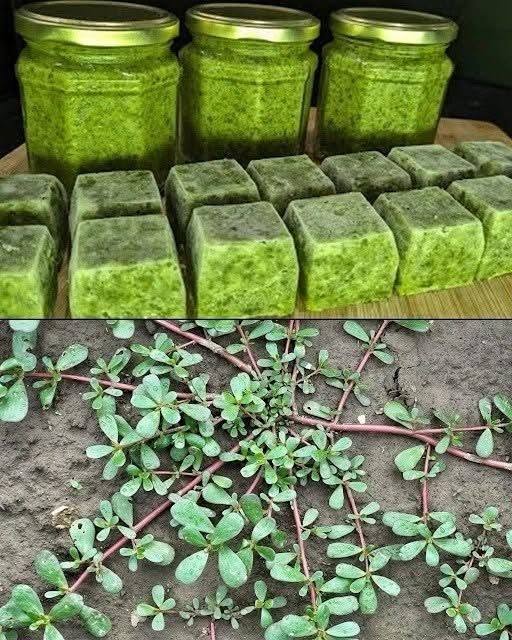
🌿 Never Step on This “Weed”—It Could Be a Little Gold Mine in Your Garden!
That little plant growing between your paving stones or popping up in an overlooked corner of the garden might look like an ordinary weed.
But before you pull it out or step on it, take a closer look. 👀
Some plants commonly dismissed as weeds are edible, useful, or valuable to gardeners. One particularly famous example is purslane, a low-growing plant that can appear almost anywhere.
🌱 Meet Purslane
Purslane (Portulaca oleracea) has thick, succulent-like leaves and reddish, often trailing stems.
It’s remarkably hardy and can grow in dry conditions where many other plants struggle.
For centuries, people in different parts of the world have used purslane as a food plant.
Its leaves and tender stems can be eaten when correctly identified and harvested from a clean, uncontaminated area.
🥗 Why Do People Call It a “Gold Mine”?
The nickname isn’t because the plant contains literal gold. 😄
It’s because something many gardeners regard as an unwanted weed can actually provide food and nutrients.
Purslane contains nutrients including:
- 🌿 Vitamins A and C
- 🥬 Some minerals
- 🌱 Fiber
- 🫒 Plant-based omega-3 fatty acid ALA
Its slightly sour, refreshing flavor makes it suitable for salads, soups, stir-fries, and other dishes.
⚠️ But Don’t Eat Every Plant You Find
This is extremely important.
Never eat an unknown garden plant simply because it resembles purslane.
Some plants can look surprisingly similar while being unsafe to consume.
One common look-alike is spurge, which can have a milky sap that may irritate the skin and should not be eaten.
Before consuming wild plants, make sure the identification is certain.
🚿 Where You Find It Matters
Even correctly identified purslane shouldn’t automatically go from the garden to your dinner plate.
Avoid harvesting plants growing:
🚫 Along roadsides
🚫 Where pesticides or herbicides have been applied
🚫 In areas contaminated by animal waste
🚫 In places exposed to other pollutants
If you’re growing or intentionally harvesting edible plants, keep the area clean and avoid chemical contamination.
🌿 Don’t Be Too Quick to Pull “Weeds”
Gardeners often think of weeds as unwanted plants competing with flowers and vegetables.
But nature isn’t always that simple.
Some spontaneous plants can provide food for pollinators, protect soil, or offer other ecological benefits.
Before reaching for the weed killer, consider asking:
“What exactly is this plant?”
You may discover something surprisingly useful.
💚 A Little Plant Can Have a Big Story
That tiny green plant beneath your feet might not be a nuisance at all.
It could be an edible wild plant with a long history of human use.
So the next time you spot a low-growing plant spreading across a sunny patch of soil, pause before stepping on it. 👣🌿
Just remember: identification comes first, eating comes second.
Because in the garden, sometimes what looks worthless can turn out to be one of nature’s little treasures. ✨