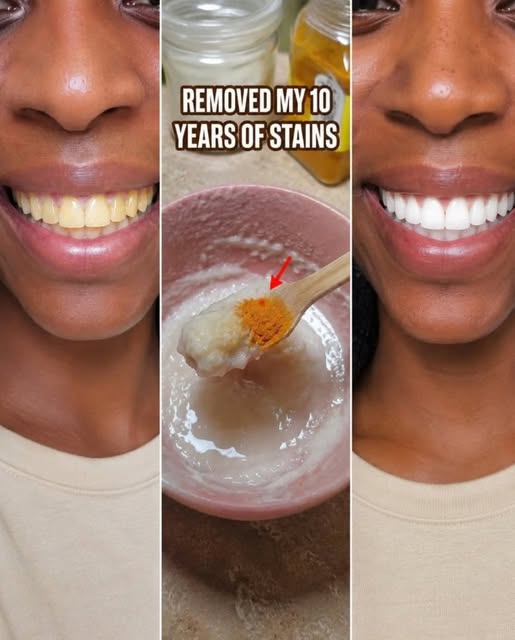
✨ Remove 10 Years of Stains From Teeth Safely at Home 🦷
If your teeth have gradually become darker or developed yellow or brown stains over the years, you may wonder whether it’s possible to brighten your smile safely at home.
The good news is that many surface stains can be reduced at home. But there is no safe DIY trick that can literally remove “10 years of stains” overnight—and some viral whitening remedies can permanently damage enamel.
🦷 First, Understand the Stain
Coffee, tea, tobacco, red wine, and other strongly colored foods and drinks can create surface stains on enamel. Whitening toothpastes can help remove some of these external stains through gentle polishing.
Other discoloration develops deeper within the tooth or results from aging, certain medications, dental conditions, or previous injury. These stains may require professional assessment and treatment.
🪥 1. Brush Consistently
Brush twice daily for about two minutes using fluoride toothpaste and a soft toothbrush.
If surface staining is your main concern, a reputable whitening toothpaste can gradually improve the appearance of your teeth. Don’t scrub aggressively—the goal is to remove plaque and surface stains without unnecessarily wearing the enamel.
✨ 2. Consider Whitening Strips
Whitening strips containing peroxide can lighten natural teeth and are generally more effective at changing tooth color than toothpaste alone. Follow the manufacturer’s directions carefully rather than using them more frequently or for longer than recommended.
If possible, choose a product carrying a recognized dental safety/effectiveness seal, such as the ADA Seal of Acceptance in the United States.
🦷 3. Dentist-Supervised Whitening at Home
One of the safest ways to whiten teeth at home is to have a dentist provide a properly fitted tray and whitening gel.
The dentist can first check whether your teeth and gums are healthy enough for whitening and give you instructions for using the product correctly.
☕ 4. Reduce New Stains
After you’ve brightened your smile, protecting the result matters.
Try to limit frequent exposure to major staining sources such as:
- ☕ Coffee
- 🍵 Tea
- 🚬 Tobacco
- 🍷 Red wine
- 🥤 Dark-colored soft drinks
- 🍛 Highly pigmented sauces
Regular brushing and cleaning between the teeth can also help prevent new surface buildup.
🚫 Avoid Viral DIY Whitening Tricks
Don’t use lemon juice, vinegar, charcoal powders, homemade peroxide mixtures, or abrasive scrubs to try to achieve dramatic whitening.
The American Dental Association notes that evidence for many DIY whitening methods is limited, while abrasive or acidic approaches can damage enamel. Charcoal products in particular have raised concerns about abrasiveness and enamel wear.
And remember: enamel doesn’t grow back once it has been permanently lost.
⚠️ What About Sensitive Teeth?
Temporary sensitivity and gum irritation are among the most common side effects of peroxide-based whitening. They are usually mild and temporary, but persistent or severe discomfort deserves attention from a dentist.
If you have cavities, gum disease, cracked teeth, significant sensitivity, or unexplained discoloration, get a dental examination before whitening.
🌟 The Safest Way to Get a Brighter Smile
You don’t need a harsh kitchen remedy to make your smile look better.
A sensible approach is:
Good brushing + daily interdental cleaning + stain prevention + a reputable whitening product used exactly as directed.
For deeper or long-standing discoloration, dentist-supervised whitening is a much safer and more predictable option than trying to strip away years of stains with abrasive household ingredients.
✨ A brighter smile is wonderful—but protecting your natural enamel should always come first.