Soursop / Graviola: What Is It Actually? What People Boil—and the Safety Warnings You Should Know
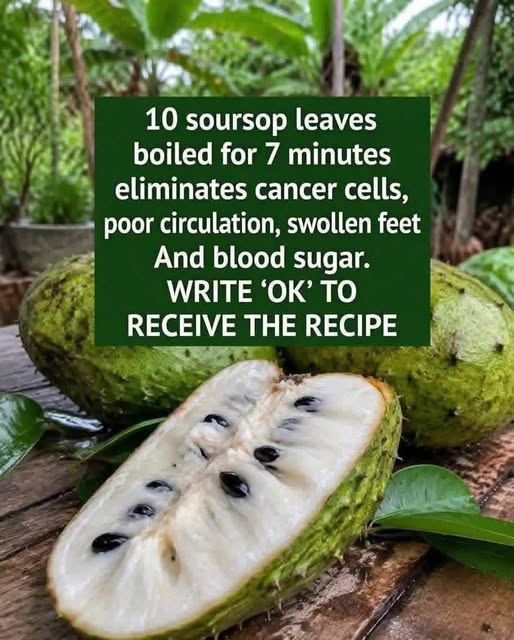
That creamy white fruit with green, prickly skin is soursop, also called graviola or Annona muricata. It has a distinctive sweet-and-tart flavor that many people describe as a combination of strawberry, pineapple, and banana.
The ripe fruit pulp is commonly eaten fresh or used in drinks, desserts, and ice cream. Eating the fruit as food is generally considered safe for most people. (Memorial Sloan Kettering Cancer Center)
But the leaves are where many online health claims begin.
🌿 What do people actually boil?
In traditional practices, people may boil soursop leaves to make a tea or infusion. The leaves and stems have been used traditionally for various purposes, but that doesn’t mean the resulting tea has been proven to treat disease. (Memorial Sloan Kettering Cancer Center)
Soursop leaf products are also sold as powders, capsules, and other concentrated supplements. These preparations can contain much higher concentrations of plant compounds than the fruit consumed as food.
What about the claims that soursop cures cancer?
This is where caution is especially important.
Laboratory studies have found compounds in soursop that can affect cancer cells, which has generated considerable interest. But laboratory activity is not proof that soursop treats cancer in humans. Human clinical evidence demonstrating that graviola cures or treats cancer is lacking. (Memorial Sloan Kettering Cancer Center)
Someone receiving cancer treatment should not replace chemotherapy, radiation, surgery, immunotherapy, or other prescribed treatment with soursop tea or supplements.
⚠️ Important safety considerations
Concentrated graviola preparations may have effects on blood sugar and blood pressure, potentially adding to the effects of medications used for those conditions. (Memorial Sloan Kettering Cancer Center)
There are also laboratory and animal findings raising concerns about compounds in graviola and possible effects on the nervous system. Researchers are still trying to establish how these findings translate to humans, particularly with long-term or concentrated exposure. (Memorial Sloan Kettering Cancer Center)
If you’re taking prescription medication, undergoing cancer treatment, or considering concentrated soursop supplements, it’s sensible to discuss them with your doctor or pharmacist first. Herbal products can interact with medicines and may affect how treatments work. (Cancer.gov)
🍈 The simple takeaway
Soursop fruit is a food. Soursop leaf tea is a traditional preparation. Neither should automatically be treated as medicine.
Enjoying the fruit is very different from consuming concentrated leaf extracts every day. And when a product is promoted as a natural cure for cancer, diabetes, or another serious illness, the claim deserves strong human clinical evidence—not just laboratory experiments or personal testimonials.
If you’ve tried soursop fruit before, comment “OK” and tell us how you liked it.