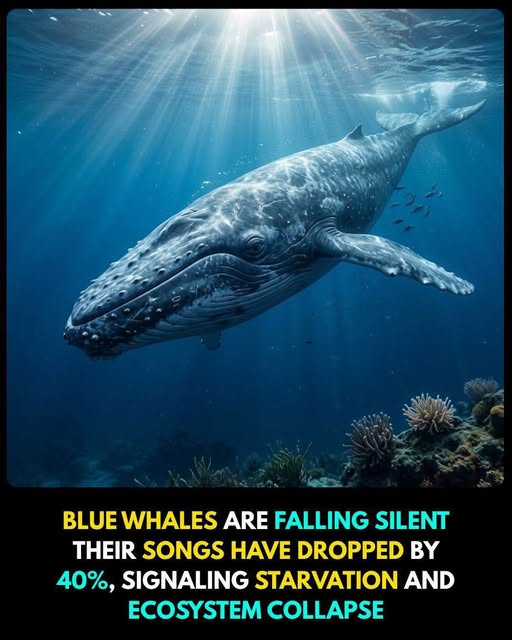
🐋 From “Legend” to Living Giants: Brazil’s Humpback Whales Are Making an Extraordinary Comeback 🇧🇷🌊
For years, humpback whales were little more than a memory along parts of Brazil’s coastline—a story passed down by older fishermen about enormous creatures that once filled the Atlantic.
Then something remarkable happened.
They came back. 🐋💙
Enrico Marcovaldi, founder of Brazil’s Projeto Baleia Jubarte, has witnessed that transformation firsthand. When his conservation work began, seeing humpback whales off Brazil was extraordinarily rare. Today, the waters are once again filled with these magnificent animals.
🌊 From the Brink of Extinction
Commercial whaling pushed South Atlantic humpback whales dangerously close to disappearing from the region.
Protection from commercial hunting, combined with decades of conservation efforts, allowed the population to recover dramatically.
Today, estimates put the Brazilian population at roughly 35,000 humpback whales, representing a substantial share of the world’s population. 🌎🐋
And their return is changing the Brazilian coastline in ways that would have seemed unimaginable decades ago.
🐋 A Spectacle Off Brazil’s Coast
During breeding season, humpbacks can be seen displaying some of their most spectacular behaviors:
💦 Males slap their tails and compete for attention.
❤️ Females choose among potential mates.
🌊 Whales are venturing into areas where they were rarely, if ever, seen before.
🏙️ Humpbacks have even been documented inside Rio de Janeiro’s Guanabara Bay, with numerous sightings recorded there.
The comeback became so significant that Brazil removed the humpback whale from its national list of threatened species in 2014.
🌱 Nature Can Recover
The story of Brazil’s humpbacks offers something increasingly rare in environmental news: a genuine conservation success story.
It doesn’t mean the whales are completely out of danger. They still face threats from entanglement, vessel strikes, pollution, climate change, and changes in the ocean ecosystem.
But their recovery demonstrates something powerful.
When destructive pressures are reduced and wildlife is given protection and time, nature can begin rebuilding itself.
What fishermen once remembered as a lost legend has become a living spectacle once again.
The whales didn’t disappear forever. We simply gave them a chance to return. 🐋🌊💙
And perhaps that’s one of conservation’s greatest lessons:
Sometimes, protecting nature isn’t about creating something new. It’s about giving something extraordinary the opportunity to come back. 🌎💚