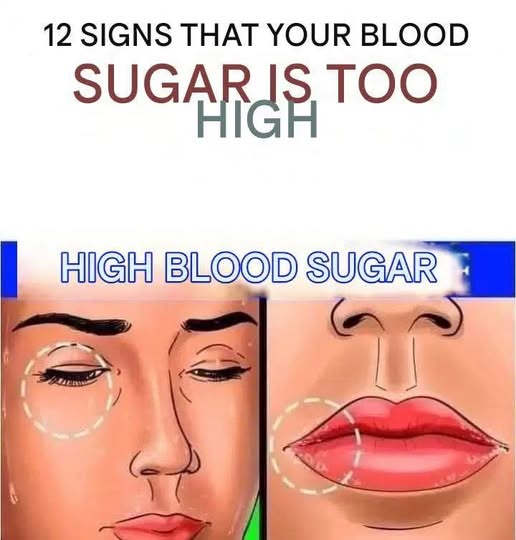
🍬 The High-Sugar Alert: 12 Key Symptoms Your Body May Be Showing You
High blood sugar can sometimes develop quietly, but your body may also give you clues that something isn’t quite right.
Persistent symptoms don’t automatically mean you have diabetes—many can have other causes—but recognizing them can help you know when it’s worth getting your blood glucose checked. 🩺
🚨 1. Constant Thirst
Feeling unusually thirsty, especially when it doesn’t seem related to heat or exercise, can occur when blood sugar becomes elevated.
Your kidneys may try to remove excess glucose through urine, increasing fluid loss and leaving you thirsty.
🚽 2. Frequent Urination
Needing to urinate much more often than usual—particularly at night—can be another sign of elevated blood sugar.
If this change is persistent, don’t simply assume it’s part of getting older.
😴 3. Unusual Fatigue
When glucose can’t be used effectively by your body’s cells, you may feel unusually tired or lacking in energy.
Persistent fatigue can have many causes, however, so it shouldn’t be used to diagnose diabetes by itself.
👀 4. Blurred Vision
High blood glucose can temporarily affect the shape of the lens in your eye, causing blurred vision.
Sudden or significant changes in vision should always be evaluated by a healthcare professional.
🍽️ 5. Increased Hunger
Some people with uncontrolled diabetes experience increased hunger, even after eating.
When glucose isn’t being used effectively for energy, the body may continue sending hunger signals.
⚖️ 6. Unexplained Weight Loss
Losing weight without trying can be an important warning sign, particularly when accompanied by increased thirst and urination.
This can occur when the body begins breaking down fat and muscle because it cannot properly use glucose for energy.
🩹 7. Cuts That Heal Slowly
High blood sugar over time can affect circulation and the body’s ability to heal wounds efficiently.
A cut or sore that repeatedly takes much longer than expected to heal deserves attention.
🦠 8. Recurrent Infections
Frequent infections, including certain skin, urinary tract, or yeast infections, can sometimes occur with poorly controlled diabetes.
If infections keep returning, it’s worth discussing the pattern with your healthcare professional.
🖐️ 9. Tingling or Numbness
Persistent tingling, burning, or numbness—particularly in the feet or hands—can be associated with diabetic nerve damage after prolonged high blood sugar.
Don’t ignore symptoms that gradually worsen.
🧴 10. Dry, Itchy Skin
Elevated blood sugar can contribute to dehydration, which may leave the skin unusually dry.
However, dry or itchy skin is extremely common and can have many unrelated causes.
🦷 11. Changes in Oral Health
People with diabetes can be more prone to gum problems, including swollen, tender, or bleeding gums.
Persistent bad breath or changes in your gums should be discussed with a dentist or doctor.
🧠 12. Difficulty Concentrating
Some people experiencing significant blood-sugar changes describe feeling mentally foggy, sluggish, or having trouble concentrating.
If confusion becomes sudden or severe, particularly alongside other serious symptoms, seek urgent medical attention.
🩸 The Important Thing to Remember
Having one or two of these symptoms doesn’t mean you have diabetes.
The only way to determine whether your blood sugar is elevated is through appropriate testing, such as a blood glucose test or HbA1c test recommended by a healthcare professional.
And some people with type 2 diabetes have few or no obvious symptoms, which is why routine screening can be important for people at increased risk.
⚠️ When High Blood Sugar Becomes an Emergency
Extremely high blood sugar can become dangerous.
Seek urgent medical care if high blood sugar is accompanied by symptoms such as vomiting, severe dehydration, abdominal pain, rapid or deep breathing, fruity-smelling breath, extreme weakness, or confusion.
❤️ Don’t panic over a single symptom—but don’t repeatedly ignore changes in your body either.
Sometimes the simplest step, such as getting your blood sugar checked, can provide an answer and help you take action early.