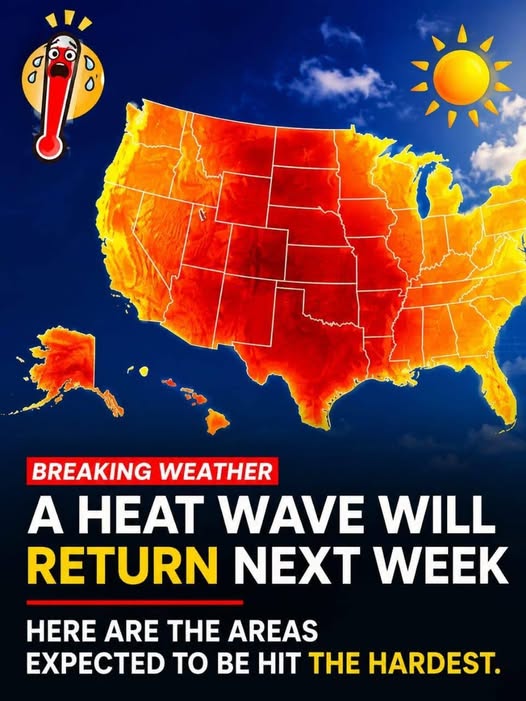
These Regions Will Be Suffocated by Heat Starting Tuesday
A large area of the United States is facing another stretch of potentially dangerous summer heat, and the latest outlook suggests that the most persistent conditions will focus on parts of the South-Central and Southeastern U.S.
The heat is not simply about high afternoon temperatures. When humidity remains elevated, the heat index—the temperature it actually feels like—can become substantially higher than the thermometer reading.
According to the National Weather Service Climate Prediction Center’s latest outlook, a major, long-duration period of extreme heat is expected to continue across portions of the Central and Southern Plains, Middle and Lower Mississippi Valley, Tennessee Valley, and Southeast. (Climate Prediction Center)
🌡️ Which areas could be hit hardest?
The areas highlighted in the latest outlook include portions of:
- Texas and Oklahoma
- Arkansas and Louisiana
- Mississippi and Alabama
- Tennessee and surrounding parts of the Tennessee Valley
- Georgia and Florida
- Parts of the Central and Southern Plains
- Parts of the Lower and Middle Mississippi Valley
The exact intensity will vary considerably from one location to another, so a broad map like the one circulating online should not be treated as a city-by-city forecast.
The National Weather Service is currently forecasting particularly significant heat risks across portions of the south-central and southeastern United States, with the highest risks concentrated in the Central/Southern Plains, Mississippi Valley, and Southeast. (Climate Prediction Center)
🥵 Why this heat can become dangerous
Extreme heat becomes more hazardous when nighttime temperatures remain high and humidity prevents the body from cooling efficiently.
People at greater risk include older adults, young children, people with certain chronic conditions, outdoor workers, and anyone exercising or working intensely in the heat.
Warning signs of heat-related illness can include heavy sweating, weakness, dizziness, headache, nausea, confusion, and fainting.
💧 What you can do now
If hot conditions are forecast for your area:
Drink water regularly, even before you become extremely thirsty.
Try to schedule strenuous outdoor activities for cooler portions of the day and take frequent breaks in an air-conditioned or shaded environment.
Wear lightweight clothing and never leave children, older adults, or pets inside a parked vehicle.
And remember that a weather map showing red or orange across a large region doesn’t mean every location will experience the same temperatures. Check your local National Weather Service forecast and heat alerts for the most accurate information.
The heat outlook is currently showing a particularly concerning pattern across the South-Central and Southeastern U.S., so residents in those areas should keep an eye on updated forecasts as the week approaches. (Climate Prediction Center)
Stay cool, stay hydrated, and take extreme-heat warnings seriously.