9 Foot Symptoms You Shouldn’t Ignore
Your feet can sometimes reveal problems that begin elsewhere in the body. A change in sensation, skin color, temperature, or the way a wound heals doesn’t necessarily mean you have a serious disease—but persistent or unusual symptoms deserve attention.
Here are nine foot symptoms worth knowing about.
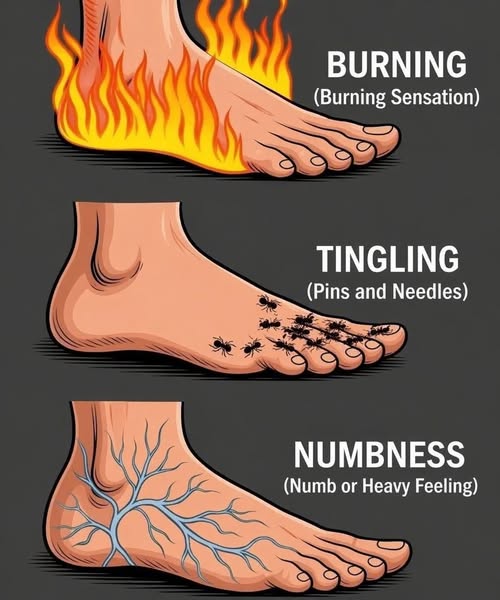
1. Persistent tingling or “pins and needles”
Repeated tingling in the feet can be a sign of nerve irritation or peripheral neuropathy. Diabetes is one common cause, although nerve problems can have many other causes. (Mayo Clinic)
2. Numbness or reduced sensation
If your feet become unusually numb, you may not notice heat, cold, cuts, or injuries as easily. This is particularly important for people with diabetes, because nerve damage can increase the risk of unnoticed foot injuries. (Mayo Clinic)
3. Burning or unusual foot pain
Burning, stabbing, or shooting sensations—especially when they occur repeatedly or are worse at night—can occur with peripheral neuropathy. (Mayo Clinic)
4. Feet that are unusually cold
A foot that repeatedly feels much colder than the other may sometimes be associated with reduced circulation. Peripheral artery disease can cause coldness in the lower leg or foot, along with pain, weakness, or numbness. (Mayo Clinic)
5. Changes in skin color
Unexplained changes in the color of your feet or legs can sometimes indicate circulation problems. They should be evaluated when they are persistent or accompanied by pain, coldness, numbness, or other changes. (Mayo Clinic)
6. A sore that doesn’t heal
A cut, blister, or ulcer that remains open or isn’t healing normally should not be ignored. Poor circulation and nerve damage can both interfere with healing, particularly in people with diabetes. (Mayo Clinic)
7. Swelling, redness, or warmth
A red, swollen, or unusually warm foot can have many causes, including injury or infection. If the change is significant, painful, or accompanied by feeling unwell, prompt medical assessment may be necessary. (nhs.uk)
8. Muscle weakness or difficulty walking
Weakness in the feet, problems with balance, or difficulty walking can occur when nerves are affected. Persistent weakness should be assessed rather than simply attributed to getting older. (nhs.uk)
9. Changes in the toenails or hair growth
Slow-growing toenails or reduced hair growth on the legs can occur alongside other signs of reduced blood flow in peripheral artery disease. (Mayo Clinic)
Does a foot problem automatically mean diabetes?
No.
Many of these symptoms have causes unrelated to diabetes, including nerve compression, injuries, infections, circulation disorders, medication effects, and other medical conditions.
However, diabetes is an important cause of peripheral neuropathy, which often begins in the feet and can produce numbness, tingling, burning pain, weakness, and loss of sensation. (Mayo Clinic)
When should you get checked?
Don’t wait for a symptom to become severe if it is persistent or unexplained. In particular, seek medical advice for new numbness or tingling, weakness, recurrent foot pain, or a cut or ulcer that isn’t healing. Early evaluation can help identify the underlying cause and prevent complications. (nhs.uk)
If you have diabetes, checking your feet regularly is especially important. Look for cuts, blisters, redness, swelling, cracked skin, and changes in sensation. (Mayo Clinic)
The important takeaway
Your feet aren’t a diagnostic test for a particular disease. But they can provide valuable clues that something deserves attention.
A persistent change is worth investigating—not because it necessarily means something dangerous, but because finding the cause early is usually better than waiting until a small problem becomes a major one.