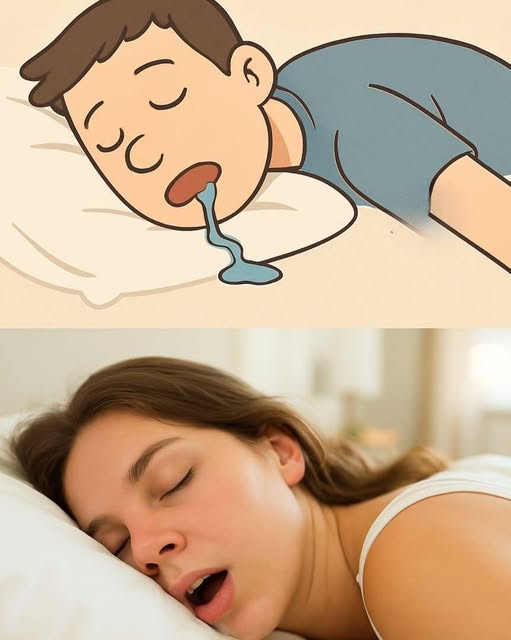
If You Drool While You Sleep, Is It a Sign That Something Is Wrong With Your Brain?
Waking up to a damp pillow can be embarrassing, but drooling during sleep is usually not a sign that your brain is failing or being damaged.
In most cases, it simply means that saliva accumulated while you were asleep and escaped through your mouth. The position you sleep in, nasal congestion, mouth breathing, and the way your jaw and facial muscles relax during sleep can all contribute.
Still, frequent or newly developed drooling can sometimes provide a clue about another issue worth paying attention to.
Why Do We Drool While Sleeping?
Your body continues producing saliva while you sleep, although usually at a lower rate than when you’re awake.
When you’re awake, you automatically swallow saliva. During sleep, swallowing happens less frequently and the muscles around your mouth become more relaxed.
If your mouth is open, saliva can eventually escape.
Sleeping on your side or stomach can make this more noticeable because gravity allows saliva to collect near the edge of your mouth.
A Blocked Nose Can Make It Worse
Nasal congestion is another common explanation.
If allergies, a cold, sinus congestion, or another problem makes it difficult to breathe through your nose, you may naturally switch to mouth breathing during sleep.
An open mouth makes drooling much more likely.
If your drooling appears mainly when you have a stuffy nose and disappears when your breathing improves, nasal congestion may be the simpler explanation.
Could Sleep Apnea Be Involved?
Sometimes.
People with obstructive sleep apnea may breathe through their mouths, snore loudly, and experience repeated interruptions in breathing during sleep.
Drooling by itself does not diagnose sleep apnea, but it becomes more relevant when it occurs alongside symptoms such as:
- Loud, persistent snoring
- Gasping or choking during sleep
- Witnessed pauses in breathing
- Morning headaches
- Excessive daytime sleepiness
- Difficulty concentrating
If several of these symptoms occur together, talking with a healthcare professional is worthwhile.
What About the Brain?
This is where sensational headlines can be misleading.
Drooling isn’t, by itself, evidence that your brain isn’t functioning properly.
However, neurological conditions can sometimes affect the muscles involved in swallowing, facial control, or saliva management. In those situations, drooling may occur together with other noticeable neurological symptoms.
For example, new difficulty swallowing, facial weakness, slurred speech, unusual weakness, tremors, or changes in coordination deserve medical attention.
A sudden onset of facial drooping, speech difficulty, or weakness on one side of the body is an emergency and should not be attributed to ordinary nighttime drooling.
When Should You Get It Checked?
Occasional drooling is generally nothing to worry about.
Consider discussing frequent or troublesome drooling with a healthcare professional if it:
- Suddenly becomes much worse
- Happens while you’re awake as well as asleep
- Occurs with difficulty swallowing
- Is accompanied by significant snoring or breathing pauses
- Appears alongside new neurological symptoms
- Causes repeated choking or breathing problems
The underlying cause matters more than the drooling itself.
Simple Things You Can Try
If you’re otherwise well, a few changes may help:
Treat nasal congestion. Managing allergies or a blocked nose may reduce mouth breathing.
Experiment with your sleeping position. Some people drool less when sleeping on their back, although this position isn’t appropriate for everyone—particularly people with certain breathing disorders.
Keep your bedroom comfortable. Excessively dry air can irritate the nose and encourage mouth breathing in some people.
Pay attention to patterns. Notice whether drooling happens mainly during allergies, illness, certain sleeping positions, or after taking particular medications.
The Bottom Line
Drooling while asleep is usually a normal and harmless occurrence, not a warning that your brain is deteriorating.
The important thing is context. If drooling is new, severe, or accompanied by snoring, breathing interruptions, swallowing problems, or neurological changes, it may be worth finding out what’s causing it.
So if you occasionally wake up with a wet pillow, you probably don’t need to panic.
Your pillow may simply be collecting evidence that you slept deeply enough to relax.