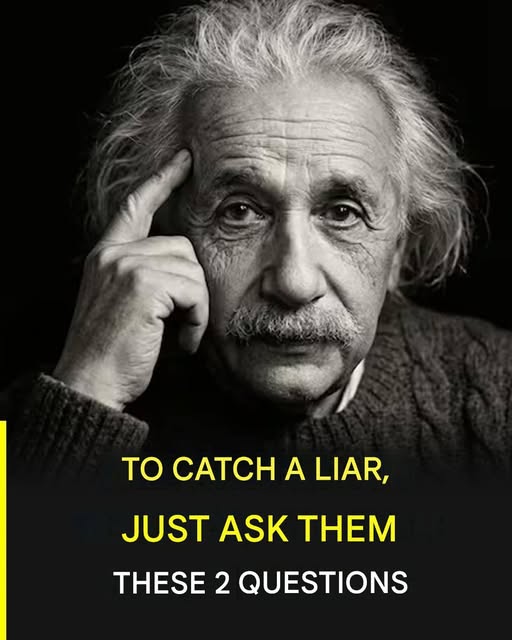
🕵️♀️ To Catch a Liar, Ask These Two Questions: A Psychological Technique That Can Reveal Contradictions
Have you ever had the feeling that someone wasn’t telling you the whole truth?
Maybe their story seemed slightly different each time they told it. Perhaps certain details didn’t quite add up, but you couldn’t put your finger on exactly what was wrong.
There is no magic question that can instantly expose a liar. However, asking calm, open-ended questions and comparing a person’s answers for inconsistencies can sometimes reveal important contradictions.
Here are two questions that can be surprisingly useful.
1. “Can You Tell Me Exactly What Happened?”
Instead of confronting someone with, “Are you lying to me?”, invite them to explain the situation in their own words.
Then listen carefully.
Don’t interrupt.
Don’t fill in missing details for them.
Let them construct the story themselves.
Pay attention to whether the timeline is coherent, whether important details change, and whether their explanation leaves obvious gaps.
A truthful person can also forget details or become nervous, so nervousness alone is not evidence of lying.
2. “What Happened Next?”
This simple follow-up can be more revealing than repeatedly asking whether someone is telling the truth.
Once you’ve heard their initial explanation, ask them to continue the story chronologically.
For example:
“What happened when you arrived?”
“And what happened next?”
“And after that?”
You’re not accusing them.
You’re simply asking them to provide more information.
If the original story was fabricated, maintaining a consistent timeline can become difficult as more details are requested.
🧠 Why This Can Work
One reason open-ended questioning can be useful is that inventing and maintaining a detailed false story requires mental effort.
Someone who is telling the truth may still make mistakes, forget details, or remember events differently. But when an account contains genuine contradictions, asking neutral follow-up questions gives those inconsistencies an opportunity to become visible.
That’s very different from trying to “read” someone’s eyes, body language, or facial expressions.
⚠️ Don’t Treat One Contradiction as Proof
This is the most important part.
A person changing a detail doesn’t automatically mean they’re lying.
Memory is imperfect.
Stress can affect recall.
People can misunderstand questions.
And sometimes two people genuinely remember the same event differently.
So rather than asking, “Did they look nervous?”, ask:
“Does the evidence support what they’re saying?”
Look for independent information, dates, records, messages, photographs, or other reliable evidence when the situation is important.
🔎 The Better Approach
If you suspect someone isn’t being truthful, stay calm.
Ask:
“Can you tell me exactly what happened?”
Then:
“What happened next?”
Listen without constantly correcting them.
Compare their answers with what you already know.
And most importantly, don’t mistake confidence for honesty—or nervousness for deception.
Sometimes the truth isn’t exposed by a dramatic confrontation.
It’s revealed when a person’s story simply can’t remain consistent under gentle, ordinary questions. 🕵️♂️