🍉 You Cut Open a Watermelon and Saw Cracks? Stop Eating It Immediately—Here’s What It Could Mean!
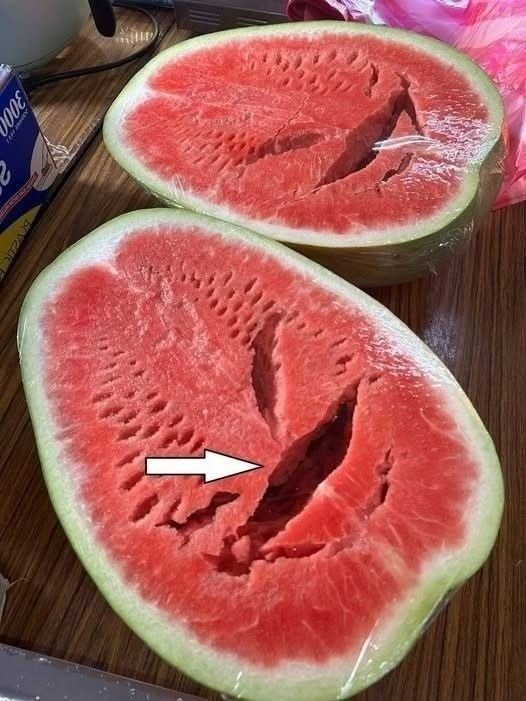
You slice open a watermelon expecting bright red, juicy flesh—and instead, you see cracks running through the inside.
Before you take another bite, it’s worth knowing what those cracks can mean.
Not every internal crack means a watermelon is dangerous, but the appearance, smell, texture, and storage history all matter. Here’s how to tell when it’s better to put it back in the trash. ⚠️
🔍 What Causes Cracks Inside a Watermelon?
Internal cracks can occur naturally while a watermelon is growing. Rapid changes in water availability, growing conditions, or pressure inside the fruit can cause the flesh to split.
There’s also a condition sometimes called hollow heart, where the inside develops gaps or cracks while the watermelon is growing.
In these cases, the fruit may still be perfectly safe to eat if it otherwise looks and smells normal.
So seeing a crack alone doesn’t automatically mean the watermelon has gone bad.
🚨 When Should You Throw It Away?
Be much more cautious if the cracks are accompanied by other warning signs.
Don’t eat it if you notice:
- 🤢 A sour, fermented, or unpleasant smell
- 🦠 Mold or fuzzy growth
- 🟤 Brown, black, or unusually discolored flesh
- 💧 Slimy or excessively mushy texture
- 🫧 Bubbling or signs of fermentation
- 🍉 Flesh that looks severely deteriorated
- 🌡️ The cut watermelon was left unrefrigerated for too long
When several of these signs appear together, it’s safest not to take a chance.
🧊 What About a Freshly Cut Watermelon?
Once you cut a watermelon, bacteria can be transferred from the rind to the flesh through the knife.
That’s why cut watermelon should be refrigerated promptly and stored properly.
If you’re unsure how long it has been sitting at room temperature, especially in hot weather, throwing it away is the safer choice.
👃 Trust Your Senses—but Don’t Rely on Them Alone
A watermelon that smells fermented or feels slimy is an obvious reason to discard it.
However, harmful bacteria aren’t always detectable by smell, taste, or appearance.
So proper refrigeration and food-handling practices are more reliable than simply checking whether the fruit “looks okay.”
🍉 The Bottom Line
Internal cracks by themselves do not necessarily mean a watermelon is unsafe.
They can be a natural growing defect and may affect texture more than safety.
But if those cracks are accompanied by mold, foul odors, sliminess, unusual discoloration, or improper storage, don’t eat it.
When it comes to questionable food, there’s no prize for taking the risk.
If you’re genuinely unsure, throw it out. 🗑️🍉
A sweet watermelon should be refreshing—not something that leaves you wondering whether that last bite was a mistake.