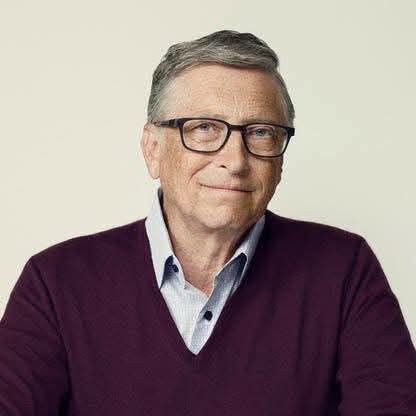
🤖⚠️ Bill Gates Warns: “There Is No Plan” for the AI Revolution
Artificial intelligence is advancing at a breathtaking pace.
But while companies race to build increasingly capable AI systems, Bill Gates is asking a much bigger question: Are governments and society actually prepared for what comes next?
In a new 12-page essay, Gates argues that the transition into the AI era could become one of the most turbulent periods in modern history if governments, businesses, and communities fail to prepare for the disruption. He says society currently lacks a clear plan for managing the enormous changes AI could bring.
And his concerns go far beyond chatbots.
💼 AI Could Transform Work Faster Than Previous Revolutions
One of Gates’s biggest concerns is employment.
Previous technological transformations often unfolded over generations. The shift from agricultural work toward office and industrial employment, for example, happened gradually.
Gates believes AI could move much faster.
He argues that law, customer service, software, medicine, manufacturing, sales, and other fields could experience major changes within a decade, with entry-level and mid-level positions particularly vulnerable. Blue-collar work could also eventually be affected as increasingly capable robots become cheaper and more widespread.
The concern isn’t simply that some jobs will disappear.
It’s what happens to communities when large numbers of people lose work at roughly the same time.
Work provides people with income, but it can also provide purpose, dignity, routine, and social connection.
If AI dramatically reduces the number of available jobs, Gates argues, society will need a stronger safety net and better systems for retraining displaced workers.
🧠 Critical Thinking Could Become More Important Than Ever
There’s another danger Gates highlights: people becoming too dependent on AI.
AI can summarize information, answer questions, generate images, write essays, analyze data, and increasingly perform complex reasoning.
That convenience is powerful.
But it also creates a temptation to stop thinking for ourselves.
In an era filled with deepfakes, misinformation, automated persuasion, and AI-generated content, the ability to distinguish fact from fiction may become one of the most important skills people possess.
Gates is particularly concerned about young people.
If children grow up relying on AI companions that are always available, endlessly agreeable, and designed to adapt to their preferences, he worries they could miss some of the difficult but important social experiences through which people develop resilience and interpersonal skills.
🕵️♂️ The Risks Go Beyond Jobs
Gates also warns that AI could make existing threats much more powerful.
Cybercriminals could use AI to find software vulnerabilities.
Fraudsters could create increasingly convincing scams.
Deepfakes could become harder to distinguish from reality.
Governments and other powerful organizations could use AI for surveillance or manipulation.
And AI could potentially increase the capabilities of people attempting to cause harm through cyberattacks or biological threats.
That creates an unusual problem.
The same technology that can help defend a system can potentially help attack it.
AI could make hospitals more efficient—but also create new cybersecurity vulnerabilities.
It could accelerate medical research—but also potentially make dangerous biological work easier.
It could improve communication—but also make misinformation cheaper and more convincing.
The technology itself isn’t automatically good or bad.
How humanity chooses to use it matters.
🌱 But Gates Isn’t Calling for an End to AI
Despite the warnings, Gates is far from anti-AI.
In fact, he believes the technology could produce extraordinary benefits.
He points to potential advances in healthcare, agriculture, education, government services, and clean energy.
AI could help doctors analyze medical information, give farmers better advice about crops and weather, help students learn, simplify complicated government applications, and accelerate the development of medicines.
In poorer countries, he sees especially significant potential.
AI could eventually give farmers access to sophisticated agricultural guidance that was previously available mainly to wealthier producers.
Healthcare systems with too few doctors or specialists could use AI to extend the capabilities of medical professionals.
And teachers could potentially use AI to provide more individualized support to students.
The opportunity is enormous.
But Gates’s argument is that the benefits won’t automatically reach everyone.
Without deliberate policies, he fears AI could widen the gap between people who own and control the technology and everyone else.
👩⚕️ Some Jobs Might Need to Stay Human
One of Gates’s more unusual proposals is the idea of creating a category of work that remains “Human Reserved.”
These would be jobs or responsibilities that society deliberately chooses not to hand entirely over to machines.
Healthcare is one example.
A robot might eventually be technically capable of delivering devastating medical news.
But should it?
Gates argues that some human interactions contain something that technology cannot—or perhaps should not—replace.
Caring for an elderly person.
Comforting a grieving family.
Teaching a child.
Supporting someone through a mental-health crisis.
These aren’t merely technical tasks.
They involve empathy, trust, judgment, and human connection.
💰 Should AI and Robots Be Taxed?
Gates also revisits an idea he has advocated before:
Taxing AI and robots.
His reasoning is straightforward.
Employers already pay taxes connected to human employment. But replacing workers with machines can create different financial incentives.
A carefully designed tax on AI or robotic labor, Gates argues, could slow the rush toward replacing people while generating money for retraining programs and social safety nets.
He doesn’t present this as a complete solution.
Rather, it’s one possible tool for managing a much larger economic transition.
🌍 The Bigger Message: Start Preparing Now
Perhaps the most important point in Gates’s essay isn’t about robots, taxes, or even jobs.
It’s about preparation.
AI is developing quickly.
And once millions of businesses and individuals depend on increasingly powerful systems, changing course could become much harder.
Gates is calling for governments, businesses, educators, workers, researchers, and communities to begin discussing the rules and institutions needed to manage the transition.
He also argues that international cooperation will be necessary because AI risks don’t stop at national borders.
🤖 The Future Isn’t Written Yet
The AI revolution could create extraordinary opportunities.
It could make healthcare more accessible.
Help farmers grow more food.
Give people with disabilities greater independence.
Accelerate scientific discovery.
And potentially make many everyday tasks easier and cheaper.
But it could also disrupt livelihoods, deepen inequality, amplify misinformation, and create entirely new risks.
That’s why Gates’s warning isn’t simply:
“AI is dangerous.”
His message is more complicated.
It’s essentially:
AI is coming quickly—and we need to decide what kind of future we want before the technology decides for us.
The biggest question may not be whether machines will become more capable.
They almost certainly will.
The bigger question is whether human institutions can adapt just as quickly. 🌍🧠
Because the future of AI won’t be determined only by what machines can do.
It will also be determined by what humans choose to allow, what we choose to protect, and who gets to benefit from the technology. 🤖❤️